Watching the 2027 eclipse from Egypt's oases and temples
Published · Updated
Most visitors to Egypt for the 2 August 2027 eclipse will head for Luxor. This guide covers four other places inside the path of totality: Siwa and Bahariya oases in the Western Desert, the Temple of Hathor at Dendera near Qena, and the Red Monastery near Sohag. Before writing about any of them we checked them against our computed path. All four are inside it, as the table shows.
Egypt's tourism ministry has set up a committee to prepare eclipse events in Luxor and Siwa. At its first meeting, on 1 September 2026, it discussed choosing viewing sites with basic services such as cafeterias and toilets, and transport by domestic flights and by road between governorates.1,2
Totality at each place
| Place | Inside the path? | Totality | Begins (local) | Sun | Horizon toward Sun |
|---|---|---|---|---|---|
| Siwa (Shali old town) | Yes, 64 km from the edge | 5m 29s–5m 31s | 12:42:35 EEST | 76° up, az. 140° | 0.3° |
| Bahariya (El Bawiti) | Yes, 107 km from the edge | 6m 17s | 12:50:20 EEST | 79° up, az. 158° | 0.9° |
| Temple of Hathor, Dendera | Yes, 101 km from the edge | 6m 13s | 13:01:31 EEST | 82° up, az. 194° | 2.0° |
| Red Monastery, near Sohag | Yes, 124 km from the edge | 6m 23s | 12:58:39 EEST | 81° up, az. 183° | 3.5° |
Computed for 2 August 2027 at each point, at sea level with a smooth lunar limb. “km from the edge” is the distance to the nearer edge of the path. Horizon is the highest land in the Sun’s direction from a 90 m elevation model, ignoring buildings and trees.
The places
Siwa (Shali old town)
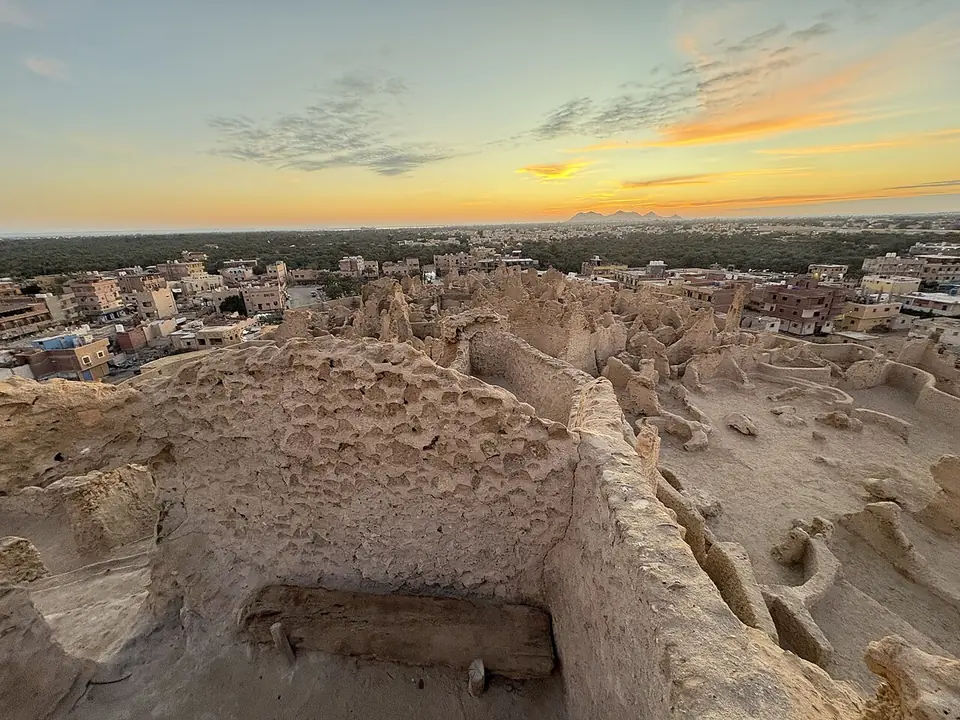

5m 29s–5m 31s totalityfrom 12:42:35 EESTSun 76° up63 km from the centre line, 64 km from the edgeAug. cloud cover 10%Aug. max 38°C
Siwa is a desert oasis about 50 km east of the Libyan border and 560 km from Cairo, with about 25,000 people. The old fortress-town of Shali, built of salt and mud-brick, towers above the modern town.9
The ministry says Luxor and Siwa will see the longest totality in Egypt, between 5 and more than 6 minutes, and the minister has spoken of tour programmes that combine the North Coast with eclipse viewing in Siwa. We get 5m 29s–5m 31s at Shali. Two published values for the slowing of Earth's rotation (ΔT) give slightly different answers here, so we show a range rather than a single number.1,3
Bahariya (El Bawiti)
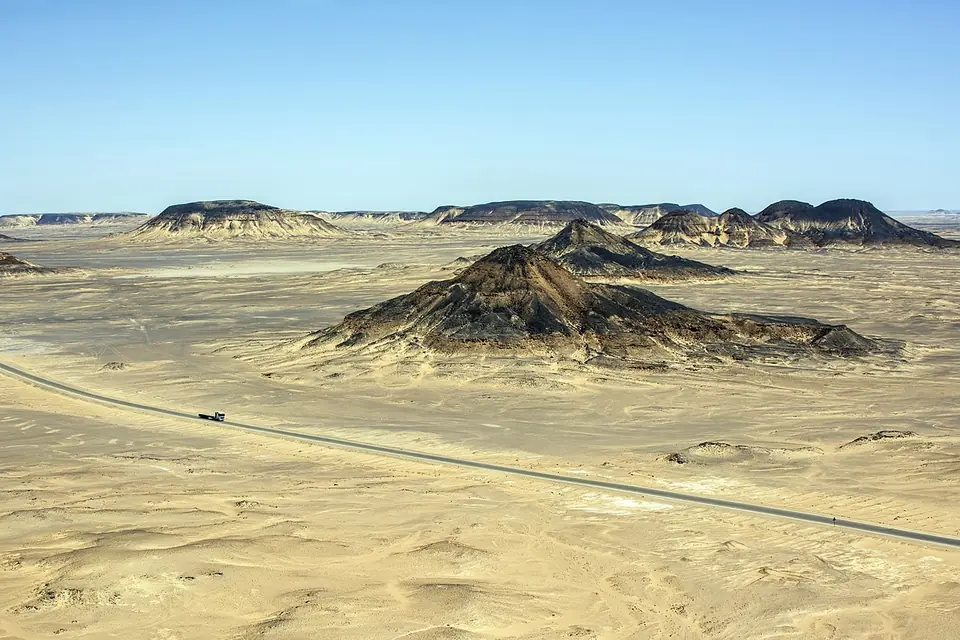

6m 17s totalityfrom 12:50:20 EESTSun 79° up21 km from the centre line, 107 km from the edgeAug. cloud cover 3%Aug. max 37°C
Bahariya is an oasis about 370 km from Cairo; El Bawiti is its largest village and administrative centre. The Black Desert, a field of volcano-shaped mounds along about 30 km, lies between Bahariya to the north and the White Desert to the south.10,11
Bawiti is 21 km from the centre line and gets 6m 17s of totality.
Temple of Hathor, Dendera
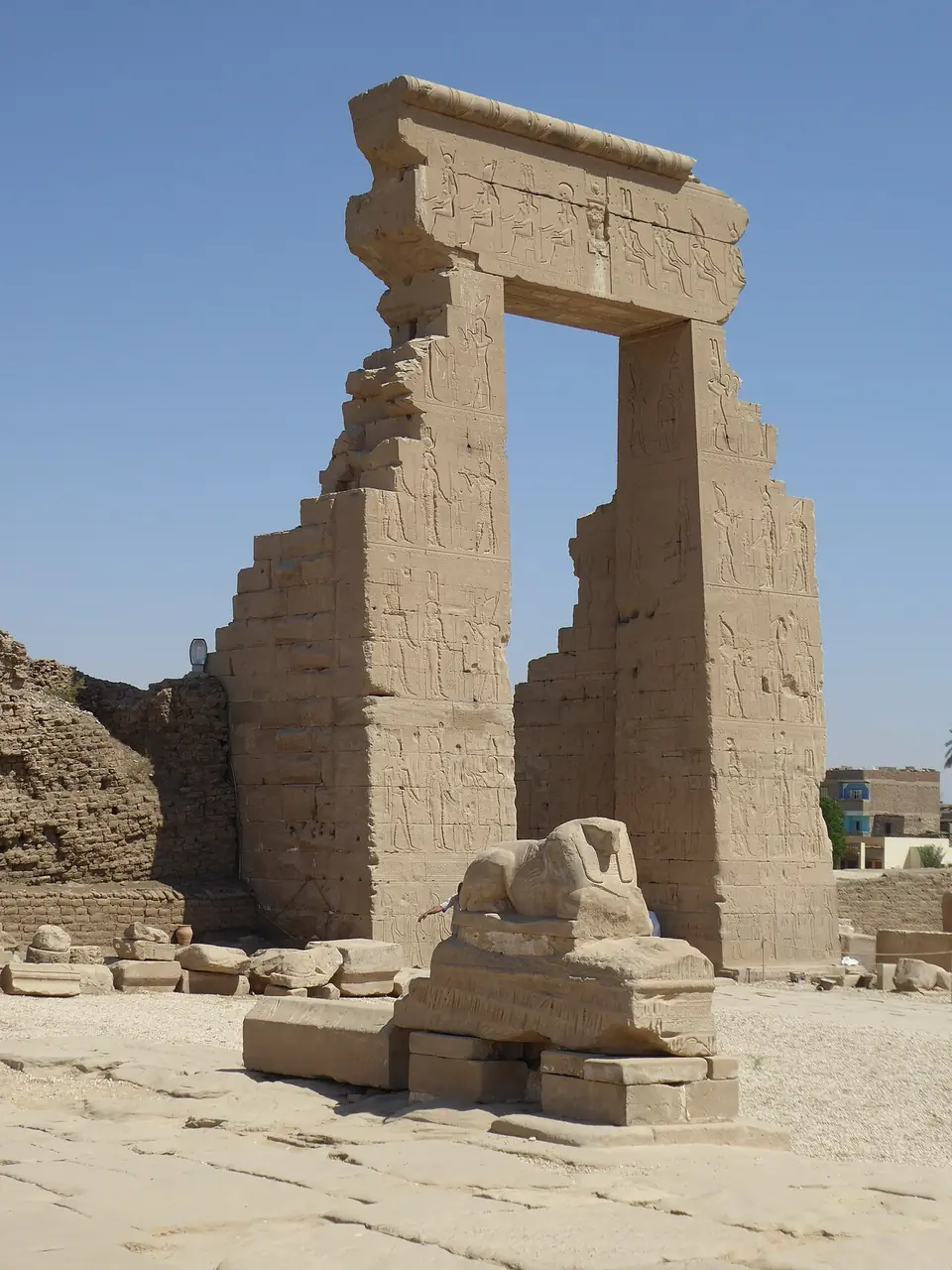

6m 13s totalityfrom 13:01:31 EESTSun 82° up28 km from the centre line, 101 km from the edgeAug. cloud cover 9%Aug. max 42°C
For the Temple of Hathor the ministry lists opening hours of 07:00 to 17:00, a foreign visitor ticket of EGP 300 (students EGP 150), a separate EGP 100 ticket for the roof, and free photography with a mobile phone. The booking site gives last entry at 16:00. Totality at 13:01:31 EEST falls inside those hours, but check them again before the day.7,8
Red Monastery, near Sohag
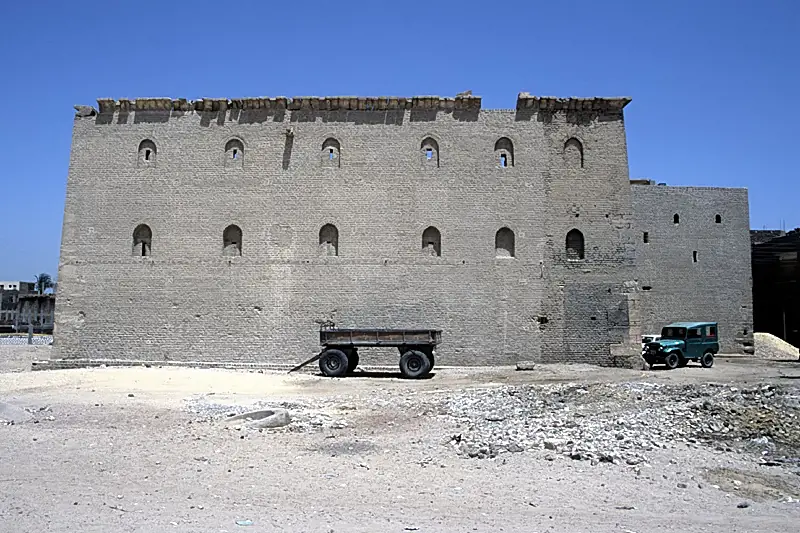

6m 23s totalityfrom 12:58:39 EESTSun 81° up5 km from the centre line, 124 km from the edgeAug. cloud cover 7%Aug. max 41°C
The Red Monastery (Deir el-Ahmar), one of Egypt's best-known Christian monasteries, is about 3.2 km north of the White Monastery at the western edge of the cultivated land near Sohag. Unlike the White Monastery it is inside a small village, and its church still serves local Coptic communities and pilgrims at the big feasts. The American Research Center in Egypt has run a restoration and conservation project there since 2003.12
It is only 5 km from the centre line, so it gets almost the longest totality on land: 6m 23s. The plateau cliffs west of the valley rise 3.5° in the Sun's direction here and 7.4° at the White Monastery, far below a Sun that is almost overhead.14
Is each place inside the path?
Yes. Every place above is inside the path of totality, which is about 260 km wide here. Siwa is the closest to an edge, 64 km inside the southern limit; the Red Monastery is 5 km from the centre line.
Sun height and horizon
The Sun is between 76° and 82° up at all four places, close to overhead. We checked the land in the Sun's direction with a 90 m elevation model. The highest horizon is 3.5°, the desert plateau behind the Red Monastery; at Dendera the plateau 11.6 km to the south reaches 2.0°, and the cliff 1.2 km from the White Monastery reaches 7.4°. Nothing in the terrain comes close to the Sun. A high Sun is easy to see but hard to frame over a temple; a wide lens pointed straight up works better than a landscape shot.14
Getting there
Siwa: Canada's advice says to reach Siwa only by the road from Marsa Matruh on the coast, about 300 km with one fuel station, and to expect military checkpoints and travel in daylight.6
Bahariya: use the Oasis road from Giza; the asphalt road to Cairo dates from the 1970s.6,10
Dendera and the Red Monastery are day trips from Qena and Sohag: the temple is 5 km from the centre of Qena and the monastery 7 km from the centre of Sohag, both in a straight line. See the Qena and Sohag pages for where to stay.
Permits, travel advice and access rules
The UK Foreign Office advises against all but essential travel to most of the Western Desert, but makes exceptions for the road from Marsa Matruh to Siwa, the oasis town of Siwa, the oasis towns of Bahariya, Farafra, Dakhla and Kharga, the White and Black Deserts, and the Giza to Farafra road. It advises against all but essential travel on the Bahariya to Siwa road, so do not plan to drive between the two oases, and against all travel within 20 km of the Libyan border.4
For off-road desert trips the UK advises a qualified guide and a permit from the Ministry of Interior. Canada says travel in the Western Desert needs a permit from the ministry's Travel Permits Department. You also need a permit to bring professional photography or filming equipment into Egypt, which matters if you are carrying a large telescope or camera kit.5,6
Travel advice changes. Read the current advice from your own government before you book and again before you travel.
Heat
August is hot in all four places. The mean August daily maximum over 2001 to 2025 is about 38°C in Siwa, 37°C in Bahariya, 42°C around Qena (Dendera) and 41°C around Sohag, and totality falls around 1 pm local time, close to the hottest part of the day. Bring shade, water and a hat for the hours of partial phases, and protect cameras and phones from direct Sun.13
Cloud
These are among the clearest places anywhere on the path. Over 2001 to 2025 between 93% and 99% of August days had less than 20% cloud at these places. The figures are for coarse satellite and model grid cells about 50 km across, not for the exact spot.13
Crowds
With official events planned in Luxor and Siwa, expect those two to be busiest. Siwa has about 25,000 residents and one recommended road in from the coast, so book rooms and transport early. The Red Monastery's church is in use by the village around it; arrive early and follow the instructions of guards and clergy.1,9,6,12
Country pages: Egypt. See also where to watch the 2027 eclipse, the totality map for your exact spot, and eclipse glasses for the partial phases.
Sources
- Al-Shorouk (1 September 2026, Arabic): tourism minister chairs first meeting on the 2027 total eclipse
- Al Masdar (1 September 2026, Arabic): tourism minister chairs the eclipse preparation committee
- Egypt Gazette (27 September 2026): tourism minister meets Japanese tour operators
- UK FCDO: Egypt travel advice, warnings and insurance (updated 4 August 2026)
- UK FCDO: Egypt travel advice, safety and security
- Government of Canada: Travel advice and advisories for Egypt
- Egyptian Ministry of Tourism and Antiquities: Temple of Dendera
- Egyptian Ministry of Tourism and Antiquities: ticket booking
- Wikipedia: Siwa Oasis
- Wikipedia: Bahariya Oasis
- Wikipedia: Black Desert (Egypt)
- Wikipedia: Red Monastery
- NASA POWER daily data, August 2001 to 2025 (cloud amount, daily maximum temperature)
- Open-Meteo Elevation API (Copernicus 90 m elevation model)
Totality, local times, Sun position and distances are computed from NASA Besselian elements (see our method). Cloud and temperature: NASA POWER daily data for August 2001 to 2025, for grid cells about 50 km across. Terrain: Copernicus 90 m elevation model via Open-Meteo, with Earth curvature and refraction.
Frequently asked questions
Which is the best of Egypt's oases and temples for the 2027 eclipse?
All four places in this guide are inside the path of totality and among the clearest spots anywhere on the path. Dendera and the Red Monastery are the easiest, as day trips from Qena and Sohag. Siwa and Bahariya are remote desert oases that need more planning and the right permits.
Can I drive between Siwa and Bahariya for the eclipse?
No. The UK Foreign Office advises against all but essential travel on the Bahariya to Siwa road. Reach Siwa by the road from Marsa Matruh on the coast, and Bahariya by the Oasis road from Giza.
How hot will it be at the Egyptian oases on eclipse day?
Very hot. Totality falls around 1 pm local time, close to the hottest part of the day, so bring shade, plenty of water and a hat for the hours of partial phases, and keep cameras and phones out of direct sunlight.