
Flights

Dunedin is the closest airport, 24 km away. Choose an airport, then add where you're flying from.
Book your flightsNearest airports

A Scottish-style city on New Zealand's South Island. Winter cloud is high, so have a backup plan.
Dunedin on New Zealand's South Island is almost on the centre line, about 4 km from it, and gets about 2m 51s of totality late in the afternoon. The Sun is only about 8° above the north-west horizon, so your view of the hills matters far more than the seconds: choose a high or western spot.
Totality runs from 16:15:53 to 16:18:43 local time on Saturday 22 July 2028. The partial eclipse begins at 15:09 and ends at 17:20, so you need eclipse glasses for everything except totality itself.
Dunedin is about 4 km from the centre line and 80 km inside the nearer edge of a path about 170 km wide, so it is already close to the most this part of the path offers.
22 July 2028 · Australia & New Zealand
Totality in Dunedin starts at 16:15:53 GMT+12 local time (22 Jul 2028, 04:15:53 UTC), at the town centre.
Totality across these spots is from 2m 49s to 2m 51s. Choose a spot with an open view to the north-west as much as for the extra seconds.
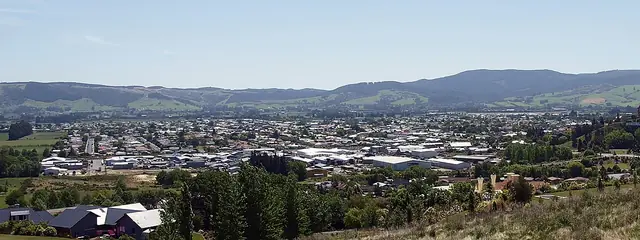
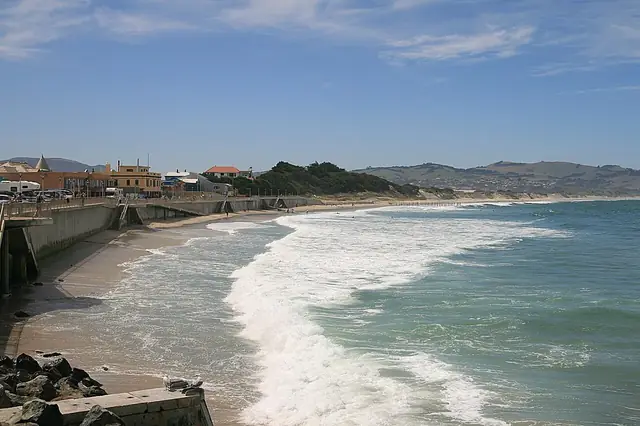

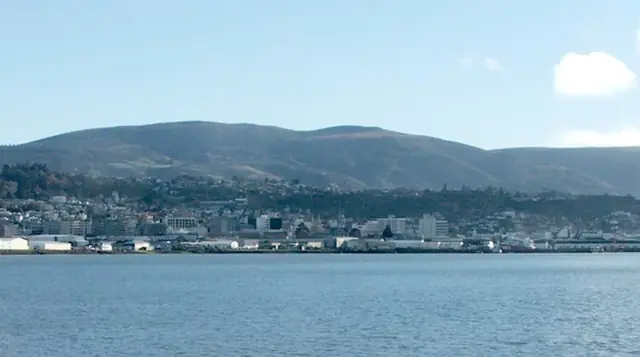
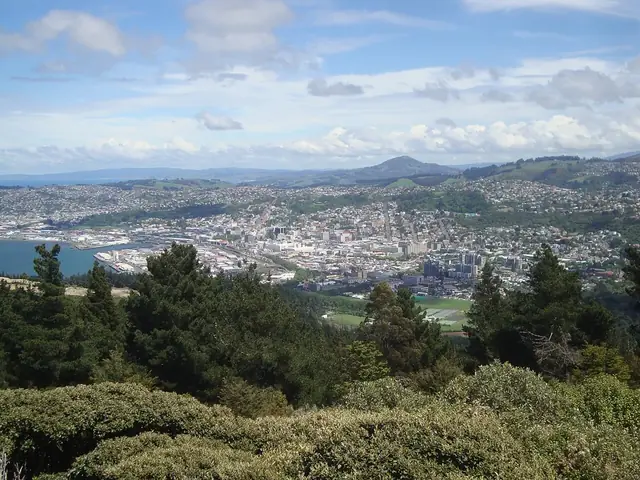
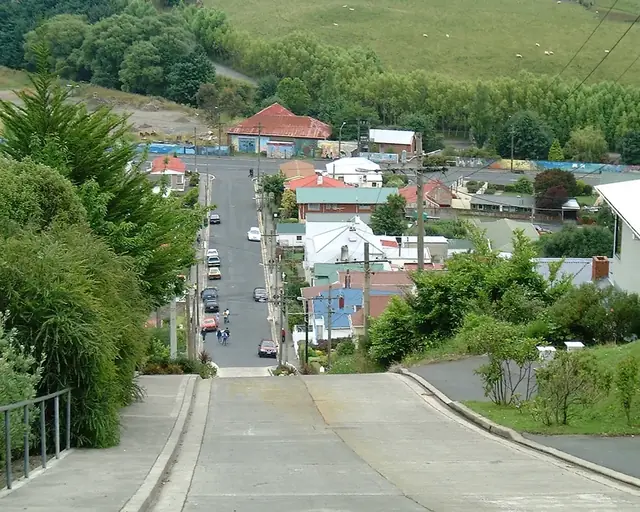
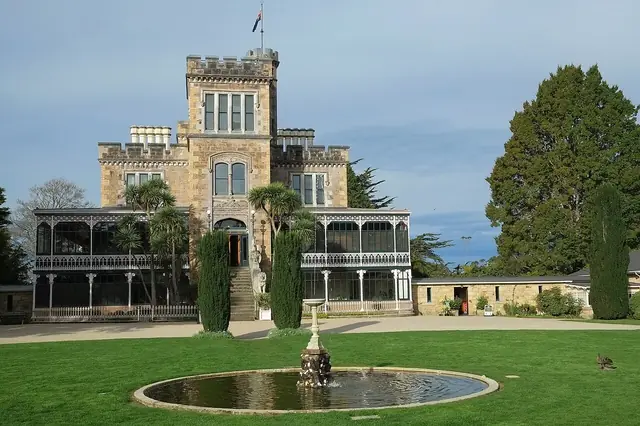
July is mid-winter: Dunedin averages 10.4 °C by day and 3.0 °C at night, with rain on about 8 days and about 115 hours of sunshine in the month (NIWA, 1991–2020). Satellite cloud odds are poor: about 69% average July cloud, and a fully clear sky at eclipse time (about 16:17) was rare over 2016–2025. That figure is the share of a large grid cell under cloud, so broken cloud with gaps is common, but you need a gap low in the north-west. Be ready to move on the day.
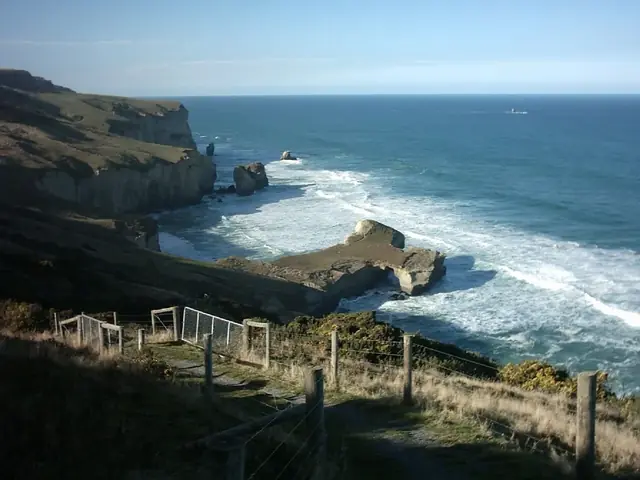
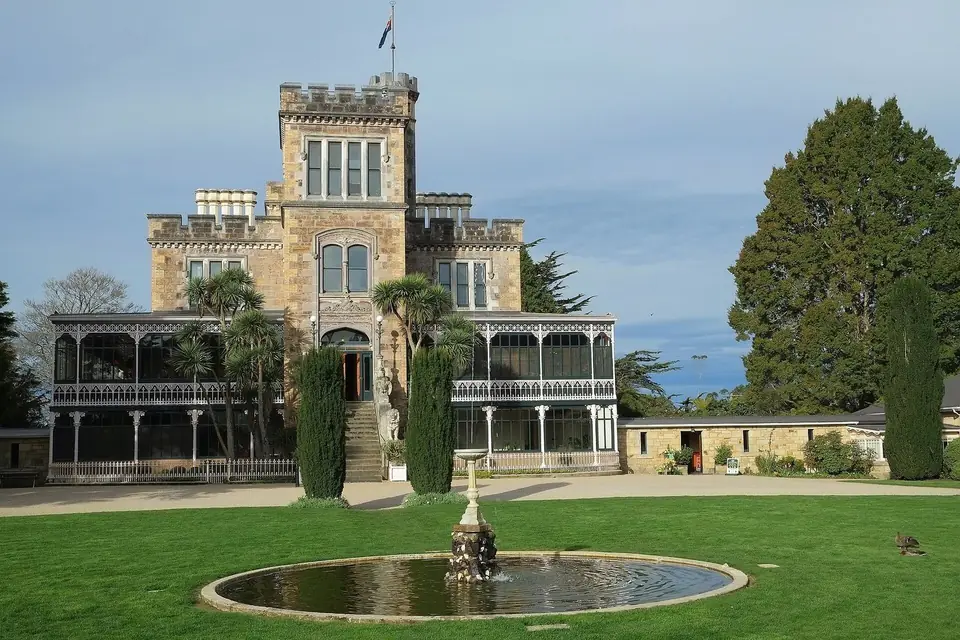
This is the critical issue in Dunedin. The Sun is only about 8° above the north-west horizon at totality, and it sets just as the partial eclipse ends (about 17:20). The city sits below hills, and our terrain check shows the Sun hidden behind the land at the Otago Museum (terrain rises to about 10°) and at Tunnel Beach (the cliffs rise to about 20°). St Clair Beach clears the hills by only about 1°. Go high or west instead: Signal Hill Lookout, Flagstaff, Larnach Castle and the Taieri Plain around Mosgiel all clear the terrain by 6–8°.
New Zealand's school holidays run from 8 to 23 July 2028, so the eclipse falls on the last weekend of the break. The Matariki public holiday is the week before, on Friday 14 July 2028.
22 July 2028 · Australia & New Zealand
Eclipse day is Saturday, 22 July 2028. Flights and hotels open for Wed 19 July to Wed 26 July (flights home Tue 25 July), and you can change the dates on the next page.
Dunedin is the closest airport, 24 km away. Choose an airport, then add where you're flying from.
Book your flights
Every link opens the partner's site in a new tab. We may earn a small commission if you book, at no extra cost to you. Affiliate disclosure
Local time in Dunedin, at the town centre. "Covered" is the share of the Sun's disc hidden by the Moon at that moment; "Sun" is its height above the horizon and direction.
| Time | Moment | Covered | Sun |
|---|---|---|---|
| 15:09 | Partial eclipse begins The Moon takes its first bite out of the Sun. Glasses on. | 0% | 16° NW |
| 15:45 | 30 minutes to go Through glasses the Sun is a shrinking crescent. | 44% | 12° NW |
| 16:00 | 15 minutes to go The light turns strange and flat; shadows get sharper. | 72% | 11° NW |
| 16:10 | 5 minutes to go It gets noticeably darker and cooler. | 91% | 9° NW |
| 16:14 | 1 minute to go The Moon's shadow rushes in; shadow bands may ripple on pale ground. | 99% | 9° NW |
| 16:15 | Totality begins Glasses off only once complete totality is confirmed, not by the clock. The Sun's glowing corona appears. | 100% | 9° NW |
| 16:18 | Totality ends The diamond ring returns. Glasses back on before the first bright sunlight reappears. | 100% | 8° NW |
| 16:48 | 30 minutes after The crescent grows again; daylight returns to normal. | 42% | 4° NW |
| 17:20 | Eclipse ends The Moon slides off the Sun. | 0% | -1° WNW |
At mid-eclipse the Sun is about 8° up towards the north-west. That is low enough to frame the eclipse above the landscape, so look for a foreground in that direction.
Practise at the same time of day before the eclipse, and weigh down your tripod if it is windy.
Your camera needs its own front-mounted solar filter. Eclipse glasses are for eyes only. Our filter picks are in the kit section below.
Wear certified ISO 12312-2 eclipse glasses whenever any part of the Sun is showing. Baily's beads and the diamond ring are direct sunlight, so keep your glasses on until they have gone. Take your glasses off only when the Sun is completely covered, and put them back on before the first bright sunlight reappears at third contact (C3). Complete totality here lasts 2m 51s.
Bring certified ISO 12312-2 glasses from home. Sellers near busy viewing spots may offer unmarked or fake viewers.
Best for: Everyone watching the partials at Dunedin.
Downside: Paper tears easily in wind; check for scratches before you look.
Best for: Families, groups, and handing spares to people nearby.
Downside: Paper frames fit kids loosely, so check the fit before the day.
Eclipse glasses are not a camera filter. Anything with a lens needs its own solar filter on the front.
Best for: Anyone shooting the partial phases with a zoom lens.
Downside: It has to fit snugly. Check it is secure before every session, and inside the path choose one you can remove and refit quickly.
Best for: Sharing a magnified crescent without a long lens.
Downside: Needs a steady hold in heat and wind. Never look through an unfiltered finder.
We only recommend ISO 12312-2 eclipse glasses, and purpose-made solar filters for cameras and other optics, from reputable makers or their authorised dealers. If you buy through one of our links, we may earn a small commission at no extra cost to you. Affiliate disclosure.
In July, Dunedin has a high chance of cloud, so stay flexible. Average cloud cover is 69%, where 0% is a cloudless sky and 100% is fully overcast; at the hour of the eclipse it averages 76% over the last ten years. Haze is usually light.
Each bar is the average cloud cover for that July; lower is better. Gold bars: 20% or less (a good year). Grey bars: over 20%. The dashed gold line marks 20%. Tap a bar for the exact figure.
Lowest cloud cover: July 2010 (53.8%). Highest: 2019 (81%).
Average cloud cover by hour; lower is better. The gold band marks the hour of the eclipse.
| Mean cloud amount, all July days 2001–2026 | 69% |
|---|---|
| Mean cloud at 04:00 UTC (2016–2025) | 76.2% |
| Mean temperature / mean daily max | 7.7°C / 9.2°C |
| Relative humidity (2 m) | 84.6% |
| All-sky ÷ clear-sky surface sunlight | 67% (clearness index 0.5) |
| Aerosol optical depth (550 nm)iHow much dust and haze dims sunlight. Under 0.1 is very clear, about 0.3 is hazy, over 0.5 is dusty. | 0.01 |
These satellite figures cover a square of land about 50 km across around Dunedin, not one street, so a sea breeze, a hill or a river valley can make your own spot a little clearer or cloudier.
See also cloud cover along the whole path.
C1 to C4 are the standard astronomers' names for the four moments, or "contacts", of an eclipse. First contact: the Moon first touches the edge of the Sun and the partial eclipse begins. Second contact: the Sun is completely covered and totality begins. Third contact: the Sun starts to reappear and totality ends. Fourth contact: the Moon leaves the Sun and the eclipse is over.
| Contact | UTC | Local | Covered | Sun altitude / azimuth |
|---|---|---|---|---|
| C1 | 03:09:06 | 15:09:06 | 0% | 16.4° / 325° NW |
| C2 | 04:15:53 | 16:15:53 | 100% | 8.6° / 311° NW |
| Max | 04:17:18 | 16:17:18 | 100% | 8.4° / 311° NW |
| C3 | 04:18:43 | 16:18:43 | 100% | 8.2° / 310° NW |
| C4 | 05:20:05 | 17:20:05 | 0% | -0.6° / 299° WNW |
| Magnitude | 1.0213 | |||
| Duration of totality | 170.8 s | |||
| Partial phase | 2h 10m 59s | |||
| Point | -45.8788°, 170.5028°, sea level (Pacific/Auckland) | |||
We don't know your local horizon. Hills, buildings or trees can hide the Sun, so check the view towards the north-west from your exact spot.
17,925 km/h (11,138 mph) at mid-eclipse.
| Bourke | 4m 05s |
| Sydney | 3m 48s |
| Wyndham | 3m 19s–3m 24s |
| Dunedin | 2m 51s |
| Kununurra | 2m 49s–2m 56s |
| Alice Springs | partial, 95% covered |
| Birdsville | partial, 99.9% covered |
22 July 2028 · Dunedin
Your eclipse deserves more than guesswork. Get exact timings, cloud forecasts and expert guides to make every moment count.
Checking availability…
Free
FreeNo card neededExact times, weather updates and helpful guides, delivered free.
4 free benefits
Everything you need, right when you need it. Get your exact eclipse times, updated cloud forecasts and practical tips delivered to your inbox as the big day approaches.
Everything you need for an unforgettable eclipse. What to expect, how to watch safely, what to bring and how to make the most of the experience with friends and family.
Capture the moments you'll never want to forget. Simple camera and smartphone settings, essential equipment and practical tips for photographing the eclipse.
A free monthly guide to upcoming sky events, with general viewing tips and guides to help you prepare.
Cloud forecasts become available within forecast range. Historical cloud averages are not forecasts, and clearer skies are never guaranteed.
Dunedin Airport (DUD) is south-west of the city, about 30 minutes by road. July is mid-winter: cold, short days and changeable cloud. Have a backup spot in mind.
Dunedin Airport is south-west of the city; allow about 30 minutes by road.
Mosgiel, on the Taieri Plain 17 km west of the city, is on the way in from the airport and has one of the clearer north-west horizons nearby.
From Dunedin airport it is about 25 min by car or taxi. Hire cars and long-distance coaches serve the main roads; on eclipse morning, roads into the path will be busy, so arrive the day before.
Next steps from Dunedin: pick your kit, check the weather, and lock a place to stay.
2m 51s of totality at the town centre; across the viewing spots below it is from 2m 49s to 2m 51s. The whole eclipse, including the partial phases, lasts about 131 minutes.
From 16:15:53 to 16:18:43 local time on 22 July 2028. The partial eclipse starts at 15:09 and ends at 17:20.
The Sun is very low in the north-west sky, close to the horizon. You need a completely open view that way, ideally over the sea or flat land.
They are the standard astronomers' names for the four "contacts" of an eclipse. First contact: the Moon first touches the edge of the Sun and the partial eclipse begins. Second contact: the Sun is completely covered and totality begins. Third contact: the Sun starts to reappear and totality ends. Fourth contact: the Moon leaves the Sun and the eclipse is over.
The narrow track swept by the Moon's dark inner shadow (the umbra). Only inside it is the Sun fully covered; just outside you get a partial eclipse.
Photos on this page come from Wikimedia Commons and are used under the licence shown. We cropped and resized them to fit; the originals are at each source link.
Kiwi.com, Expedia and GetYourGuide names and logos are trademarks of their owners, shown only to name the partner each link goes to.
Spotted a figure that looks wrong? Report a correction.
Last updated


