Flights

Egypt has the longest totality, and Spain, Morocco and Tunisia are closer to Europe. Choose an airport on the path, then add where you're flying from.
Book your flightsAirports on the path

On 2 August 2027 the Moon will completely cover the Sun along a narrow strip from southern Spain, across North Africa, to Arabia, crossing 10 countries. Near Sohag in Upper Egypt the darkness lasts up to 6 minutes 23 seconds (6 minutes 21 seconds in Luxor town centre), with the Sun almost overhead in some of the clearest skies on Earth. That's why eclipse chasers call it the eclipse of the century: according to NASA's catalogue, no total eclipse will last longer until 3 June 2114. Be inside the path, as close to its centre as you can.
Tap anywhere for your exact seconds, contact times and local sunrise and sunset. Open the full totality map.
2 August 2027 · Spain, North Africa & Arabia
In Luxor (among the longest totalities on land) the Sun disappears at 13:02:07 EEST local time and stays hidden for 6m 21s at the town centre. Pick your spot to count down to totality where you'll stand.
Get your exact eclipse times and cloud forecasts by email. Plus, everything you need to prepare for the big day with your free Eclipse Handbook and Photography Guide.
2 August 2027
Your eclipse deserves more than guesswork. Get exact timings, cloud forecasts and expert guides to make every moment count.
Checking availability…
Free
FreeNo card neededExact times, weather updates and helpful guides, delivered free.
4 free benefits
Everything you need, right when you need it. Get your exact eclipse times, updated cloud forecasts and practical tips delivered to your inbox as the big day approaches.
Everything you need for an unforgettable eclipse. What to expect, how to watch safely, what to bring and how to make the most of the experience with friends and family.
Capture the moments you'll never want to forget. Simple camera and smartphone settings, essential equipment and practical tips for photographing the eclipse.
A free monthly guide to upcoming sky events, with general viewing tips and guides to help you prepare.
Cloud forecasts become available within forecast range. Historical cloud averages are not forecasts, and clearer skies are never guaranteed.
Seconds of totality at each town centre, best first, with average August cloud cover from 25 years of NASA satellite data. Tap a town for times, Sun height, weather and where to stand. Town-centre figures can be a second or so lower than the best spot nearby: Sohag's centre gets 6m 22s, while spots around it reach 6m 23s.
Compare places side by side: longest totality, clearest skies and highest Sun →
42 towns · 38 inside the path · longest Sohag, 6m 22s
Cloud % is the NASA POWER satellite average for August, 2001–2025: it describes past years, not eclipse day.
| Town | Totality (town centre) | Starts (local) | Sun alt. | Avg cloud | Shadow |
|---|---|---|---|---|---|
| Sohag Egypt | 6m 22s | 12:58 | 81° | 7% | 2,404 km/h |
| Luxor Egypt | 6m 21s | 13:02 | 82° | 9% | 2,402 km/h |
| Qena Egypt | 6m 10s | 13:01 | 81° | 9% | 2,402 km/h |
| Benghazi Libya | 6m 09s | 11:27 | 68° | 26% | 2,632 km/h |
| Asyut Egypt | 6m 06s | 12:56 | 81° | 7% | 2,406 km/h |
| Abha Saudi Arabia | 6m 03s | 13:34 | 71° | 59% | 2,585 km/h |
| Jeddah Saudi Arabia | 5m 58s | 13:22 | 76° | 37% | 2,472 km/h |
| Esna Egypt | 5m 45s–5m 47s | 13:02 | 82° | 9% | 2,402 km/h |
| Sfax Tunisia | 5m 39s | 10:08 | 56° | 20% | 3,073 km/h |
| Edfu Egypt | 5m 30s–5m 32s | 13:04 | 82° | 12% | 2,402 km/h |
| Marsa Alam Egypt | 5m 28s–5m 31s | 13:08 | 81° | 12% | 2,407 km/h |
| Oran Algeria | 5m 08s | 09:51 | 43° | 26% | 3,992 km/h |
| Tétouan Morocco | 4m 51s | 08:45 | 38° | 22% | 4,565 km/h |
| Tangier Morocco | 4m 51s | 08:44 | 38° | 22% | 4,622 km/h |
| Ceuta Spain | 4m 48s | 10:45 | 38° | 22% | 4,547 km/h |
| Asilah Morocco | 4m 45s | 08:44 | 38° | 30% | 4,662 km/h |
| Djerba (Houmt Souk) Tunisia | 4m 41s | 10:09 | 57° | 14% | 3,058 km/h |
| Tarifa Spain | 4m 39s | 10:45 | 38° | 19% | 4,580 km/h |
| Melilla Spain | 4m 34s | 10:48 | 41° | 37% | 4,262 km/h |
| Algeciras Spain | 4m 28s | 10:45 | 38° | 19% | 4,556 km/h |
| Gibraltar Gibraltar | 4m 27s | 10:45 | 38° | 19% | 4,542 km/h |
| Al Hoceima Morocco | 4m 26s | 08:47 | 40° | 40% | 4,387 km/h |
| Zahara de los Atunes Spain | 4m 24s | 10:45 | 38° | 19% | 4,608 km/h |
| Nador Morocco | 4m 15s | 08:48 | 41° | 37% | 4,264 km/h |
| Chefchaouen Morocco | 4m 13s | 08:45 | 39° | 22% | 4,566 km/h |
| Gabès Tunisia | 4m 06s | 10:08 | 56° | 14% | 3,103 km/h |
| Vejer de la Frontera Spain | 4m 06s | 10:45 | 38° | 19% | 4,619 km/h |
| Conil de la Frontera Spain | 4m 01s | 10:45 | 38° | 26% | 4,635 km/h |
| Taif Saudi Arabia | 3m 49s–3m 56s | 13:26 | 75° | 47% | 2,491 km/h |
| Estepona Spain | 3m 37s | 10:46 | 39° | 19% | 4,504 km/h |
| Marbella Spain | 3m 17s | 10:46 | 39° | 22% | 4,467 km/h |
| Fuengirola Spain | 3m 10s | 10:47 | 39° | 22% | 4,434 km/h |
| Tlemcen Algeria | 3m 09s | 09:51 | 43° | 31% | 4,079 km/h |
| Cádiz Spain | 2m 54s | 10:45 | 37° | 26% | 4,651 km/h |
| El Quseir Egypt | 2m 19s–2m 32s | 13:06 | 81° | 24% | 2,403 km/h |
| Málaga Spain | 1m 50s | 10:48 | 39° | 22% | 4,402 km/h |
| Jerez de la Frontera Spain | 1m 39s | 10:46 | 38° | 26% | 4,622 km/h |
| Ronda Spain | 1m 14s | 10:47 | 39° | 19% | 4,494 km/h |
| Aswan Egypt | Partial | – | 83° | 12% | – |
| Tripoli Libya | Partial | – | 60° | 10% | – |
| Misrata Libya | Partial | – | 62° | 19% | – |
| Safaga Egypt | Partial | – | 80° | 8% | – |
Longer bars mean more totality. Egypt towns are the brightest gold.
SourcesCloud cover: NASA POWER mean August cloud amount, 2001–2025, a long-term average rather than a forecast · Totality: computed from NASA Besselian elements for each town centre at sea level. Our method
Clear sky is everything. Egypt's Nile valley and Red Sea coast average only about 7–12% cloud cover in August. The Strait of Gibraltar is good but can catch sea haze on an easterly wind. The Saudi mountains build afternoon cloud.
Day turns to deep twilight, stars and planets appear, the temperature drops, and the Sun's silvery corona fills the sky. Outside the path you only see a partial eclipse, which is nothing like the real thing. So the one thing that matters is being inside the path, and the closer to its centre, the longer it lasts.
2 August 2027 · Spain, North Africa & Arabia
Getting into the path is half the battle. Here is a clear checklist, then flights, stays and tours.
Towns on the centre line, such as Tarifa and Luxor, have few rooms for the crowds an eclipse brings, so book refundable stays early, then lock flights once your spot is fixed. Aim to arrive the day before.
Spain and Morocco are easy from Europe (Gibraltar, Málaga, Tangier). Egypt is via Cairo or Luxor. Saudi Arabia needs a visa for most visitors. Check advice for Libya, Algeria, Yemen and Somalia before considering them. See which airports are inside the path.
Egypt and Saudi Arabia often top 40°C at midday. Bring shade, at least 3 litres of water per person, electrolyte sachets and sun protection. Avoid open desert without a vehicle.
Roads into the path jam on eclipse morning, so be in place before the partial begins. Carry cash as a backup. Visas: Schengen for Spain; e-visa options for Egypt and Saudi Arabia for many nationalities.
Search hotels and apartments for Saturday 31 July to Saturday 7 August 2027 near the towns we recommend. Book early: rooms inside the path go first.
Egypt has the longest totality, and Spain, Morocco and Tunisia are closer to Europe. Choose an airport on the path, then add where you're flying from.
Book your flights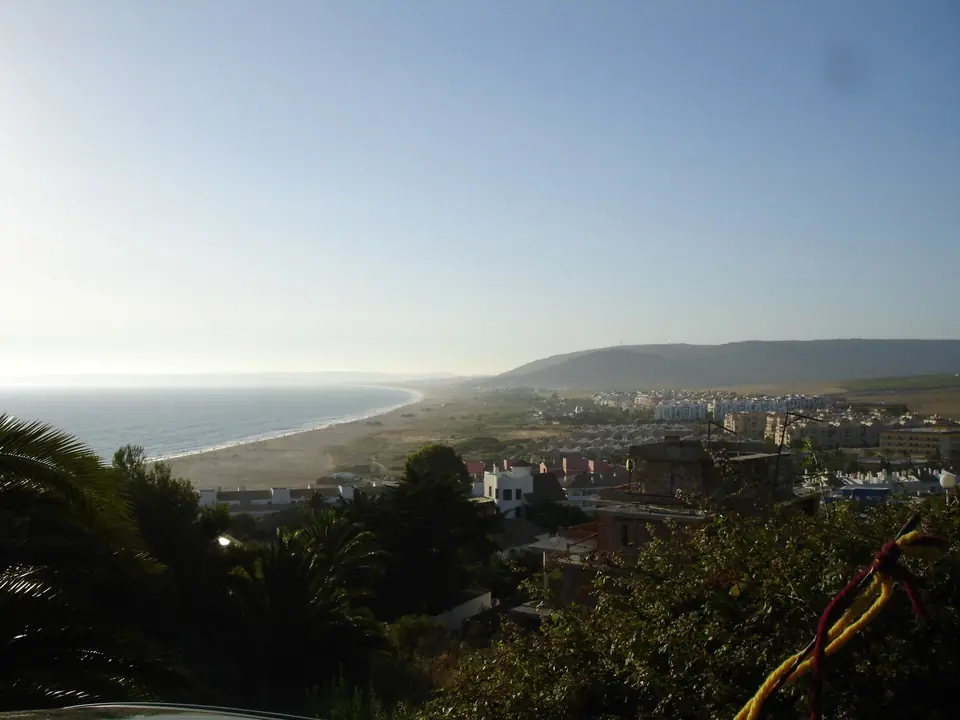

Turn the trip into more than one morning, from Luxor to Tarifa.
Book a tour or guideEvery link opens the partner's site in a new tab. We may earn a small commission if you book, at no extra cost to you. Affiliate disclosure
You need certified ISO 12312-2 eclipse glasses for every partial phase. Only during totality is it safe to look with bare eyes. Sunglasses, smoked glass and exposed film are never safe.
Paper or plastic viewers with a black polymer filter that meets the ISO 12312-2 safety standard. The standard covers direct-view viewers for your eyes only: cameras, binoculars and telescopes need their own purpose-made solar filters.
In the UK and Europe we recommend Absolute Eclipse certified glasses. Elsewhere, choose a pair with our guide. How to pick safe glasses →
A pinhole projector, a kitchen colander or tree-leaf crescents let you watch the partial phases without looking at the Sun. Use ISO 12312-2 eclipse glasses or a suitable handheld solar viewer whenever any bright part of the Sun is visible.
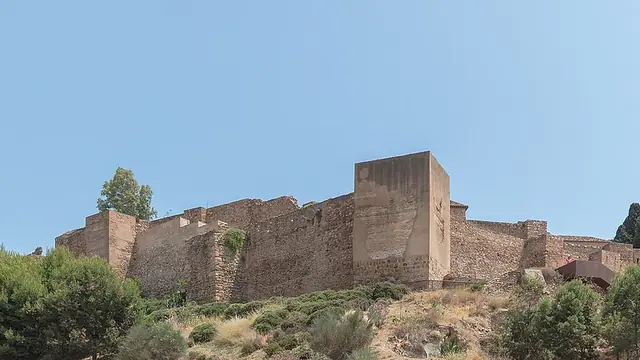
The easiest trip from Europe. The far south, around Tarifa and the Costa de la Luz, gets about four and a half minutes in mid-morning, with the Sun in the east, a little south of due east. Average August cloud: 23%.
Spain: full country guideThe Rock sits well inside the path, with about four and a half minutes and everything within walking distance. Average August cloud: 19%.
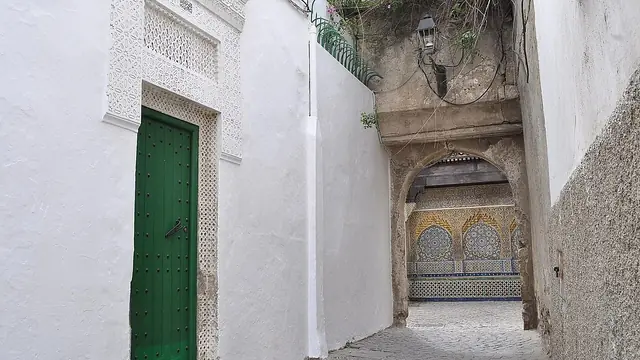
Closer to the centre line than Spain: Tangier and Tétouan get nearly five minutes, with medinas, beaches and short ferry links from Spain. Average August cloud: 29%.
Morocco: full country guideOran and the coast get over five minutes with a higher Sun. Check entry requirements early. Average August cloud: 29%.
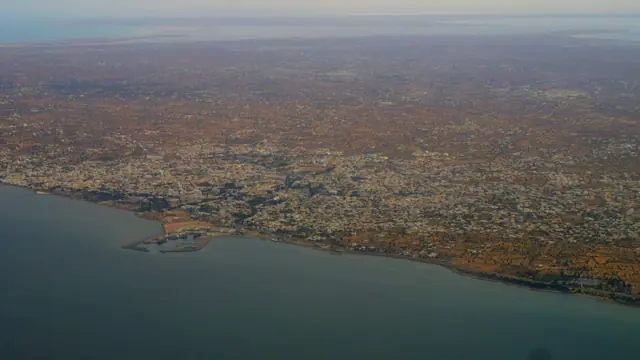
Algeria: full country guideSfax and Djerba offer long totality and drier skies than much of the Maghreb. Average August cloud: 16%.
Benghazi gets over six minutes with the Sun high overhead. Check official travel advice before planning anything. Average August cloud: 18%.
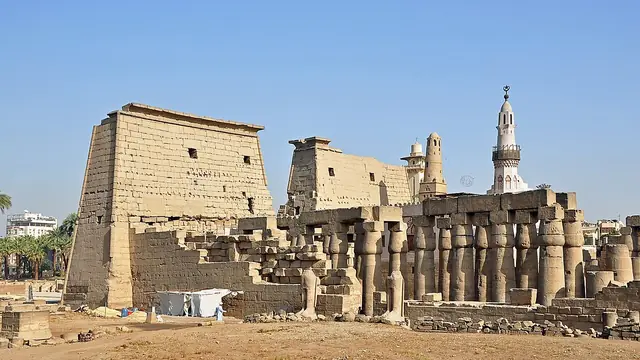
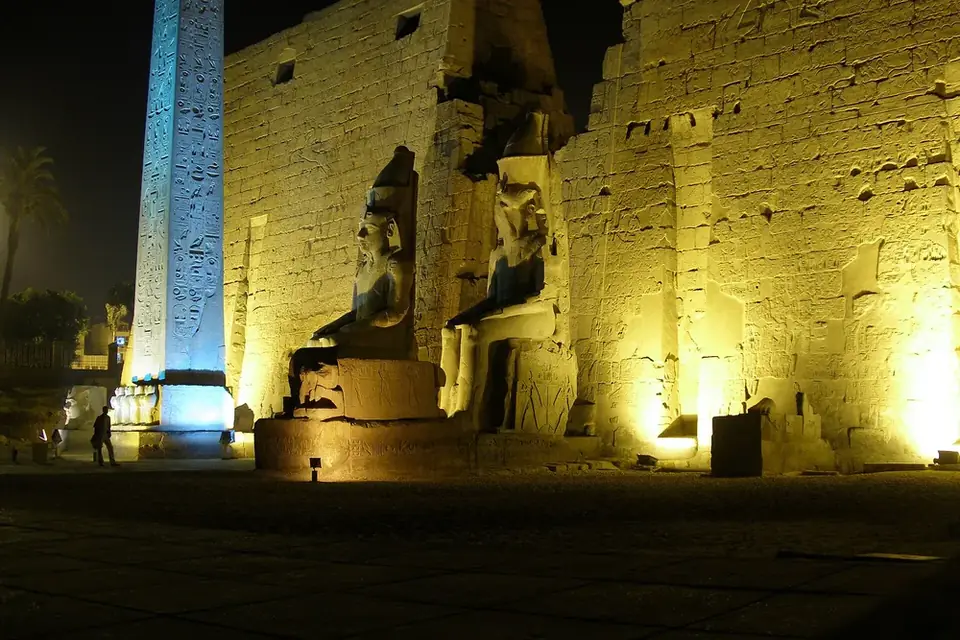
Libya: full country guideThe heart of this eclipse: over six minutes along the Nile at Luxor and Sohag, the Sun almost overhead and some of the clearest August skies on Earth. Expect 40°C heat. Average August cloud: 11%.
Egypt: full country guideJeddah gets nearly six minutes; the Asir mountains around Abha get as long but with much more cloud. Average August cloud: 48%.
Saudi Arabia: full country guideThe path crosses Yemen with five minutes or more in places, but current travel advice is against all travel. We list figures for reference only.
The shadow leaves land over Somalia's northern tip near Bosaso. Travel advice is against travel to most of the region.
A boat lets you choose your spot on the day and dodge a cloud bank, but only if you are allowed to stop there. These are real ports and marinas on or near the path, with the seconds of totality at each harbour and the August cloud odds for the nearest town we cover. Within a few kilometres the figure can change a lot, so check your exact position on the totality map.
| Port or marina | Totality | Sun height | August cloud cover (nearest town) |
|---|---|---|---|
| Strait of Gibraltar and Cádiz coast | |||
| Puerto América, Cádiz | 2m 49s | 37° | 26% |
| Puerto Sherry, El Puerto de Santa María | 2m 32s | 37° | 26% |
| Puerto de Barbate | 4m 17s | 38° | 19% |
| Puerto de Tarifa | 4m 39s | 38° | 19% |
| Alcaidesa Marina, La Línea | 4m 25s | 38° | 19% |
| Ocean Village, Gibraltar | 4m 26s | 38° | 19% |
| Tanja Marina Bay, Tangier | 4m 50s | 38° | 22% |
| Puerto Deportivo de Ceuta | 4m 48s | 38° | 22% |
| Marina Smir, M'diq | 4m 52s | 38° | 22% |
| Alboran Sea | |||
| Puerto de Estepona | 3m 40s | 39° | 19% |
| Puerto Banús, Marbella | 3m 24s | 39° | 22% |
| Puerto Noray, Melilla | 4m 33s | 41° | 37% |
| Tunisia and the Libyan coast (with caution) | |||
| Houmt Souk port, Djerba | 4m 44s | 57° | 14% |
| Port of Benghazi | 6m 09s | 68° | 26% |
| Red Sea coast of Egypt and Saudi Arabia | |||
| Port Ghalib, Marsa Alam | 4m 28s–4m 33s | 81° | 12% |
| Hamata | 6m 11s | 81° | 12% |
| Jeddah Yacht Club & Marina | 5m 59s | 76° | 37% |
| Sharm Obhur, north Jeddah | 5m 44s–5m 47s | 77° | 37% |
Search day trips and boat tours on GetYourGuide, and ask the skipper for the exact position they plan to hold at totality. We have not vetted any operator.
A little kit goes a long way. Keep the camera's solar filter securely fitted whenever any bright part of the Sun is visible. Remove it only during confirmed complete totality, and restore it before direct sunlight reappears. Bracket widely: the corona spans a huge brightness range. Most of all, do not spend all six minutes behind a screen.
A front-mounted white-light solar filter (Baader AstroSolar film or a glass filter) for your longest lens or binoculars. Must cover the front aperture fully, never use an eyepiece-only filter.
See the photography guide for settings and a shot list. Camera filters and binocular filters are on Astroshop. We may earn a small commission, at no extra cost to you. Affiliate disclosure.
Wide bracket: from the diamond ring and prominences to the outer corona. A sturdy tripod helps; a phone on a mini-tripod is enough for a keepsake. Leave gaps between shots to actually watch.
The 2027 eclipse belongs to Saros series 136, the same family as the 22 July 2009 eclipse, the longest of the 21st century so far (6m 39s, mostly over the Pacific). Totality is so long because the Moon is near its closest to Earth, making it look large, while Earth is near its farthest from the Sun, making the Sun look small. According to NASA's Five Millennium Canon, the next total eclipse to last longer is on 3 June 2114 (6m 32s).
| Greatest eclipse | 25.5° N, 33.2° E (near Luxor), 10:07 UTC |
|---|---|
| Maximum duration (at greatest eclipse, NASA) | 6m 23s |
| Sun altitude at greatest eclipse | 81.8° |
| Shadow speed near Luxor | 2,402 km/h (1,493 mph) |
| Saros series | 136 |
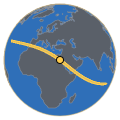
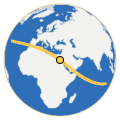
The gold band is the path of totality on the globe. The dot marks greatest eclipse.
C1 partial starts, C2 totality starts, C3 totality ends, C4 partial ends (local time).
How long totality lasts for someone standing on the centre line, from sunrise over the Atlantic (left) to sunset over the Indian Ocean (right).
The shadow is slowest where the Sun is high and races at the sunrise and sunset ends of the path.
Outside the path of totality, a band about 258 km wide, you only get a partial eclipse. Even 90% is nothing like totality.
Last updated
Monday 2 August 2027. The Moon's shadow touches down in the Atlantic, reaches southern Spain around 10:45 local time and Egypt around 13:00 local time, and leaves land over Somalia early in the afternoon.
Totality crosses southern Spain, Gibraltar, northern Morocco, Algeria, Tunisia, Libya, Egypt, Saudi Arabia, Yemen and the northern tip of Somalia. A partial eclipse is visible across Europe, Africa and western Asia, including the UK, the US East Coast sunrise, and Germany.
Up to 6 minutes 23 seconds, the longest on land, in Upper Egypt west of the Nile near Sohag; Luxor town centre gets 6 minutes 21 seconds. Southern Spain gets about 4½ minutes, northern Morocco nearly 5.
For the longest totality and the best weather odds, the Nile valley in Egypt (Luxor, Sohag, Qena). For the easiest trip from Europe, the southern tip of Spain around Tarifa, or Tangier across the Strait.
It is the longest total eclipse visible from land in decades. According to NASA's Five Millennium Canon, no total solar eclipse will last longer than this one until 3 June 2114.
Yes, as a partial eclipse only, on Monday morning 2 August 2027 (British Summer Time). None of the UK is in the path of totality. “Covered” is the share of the Sun's area hidden (obscuration), as everywhere on this site; magnitude is the share of its diameter.
| City | Covered | Magnitude | Max (BST) | Starts | Ends |
|---|---|---|---|---|---|
| London | 42% | 0.518 | 10:00 | 09:04 | 11:00 |
| Manchester | 35% | 0.458 | 10:00 | 09:06 | 10:55 |
| Edinburgh | 27% | 0.383 | 10:01 | 09:11 | 10:52 |
| Cardiff | 42% | 0.521 | 09:58 | 09:02 | 10:56 |
| Belfast | 32% | 0.425 | 09:58 | 09:07 | 10:51 |
Nearest totality: southern Spain (e.g. Tarifa, 4m 39s) or Gibraltar, about a 2.5–3 hour flight from London, or a day's drive plus the ferry to Tangier. Figures from our NASA-elements engine for each city centre.
No meaningful view from the United States. The partial eclipse happens before sunrise on the East Coast: at maximum the Sun is still well below the horizon (about −10° in Boston, −12° in New York, −26° in Miami), and by the time the Sun rises the eclipse is already over. Inland and western cities see nothing. Totality is on the far side of the Atlantic, southern Spain, North Africa and Arabia.
| City | Geometric max | Sun altitude at max | Visible? |
|---|---|---|---|
| Boston | 04:43 EDT · 26% covered | −9.7° | No |
| New York | 04:44 EDT · 27% covered | −12.3° | No |
| Miami | 04:42 EDT · 64% covered | −25.7° | No |
Yes, as a partial eclipse in the late morning (Central European Summer Time). The south sees more of the Sun covered than the north. None of Germany is in the path of totality.
| City | Covered | Magnitude | Max (CEST) | Starts | Ends |
|---|---|---|---|---|---|
| Berlin | 34% | 0.447 | 11:14 | 10:18 | 12:12 |
| Frankfurt | 45% | 0.541 | 11:08 | 10:08 | 12:11 |
| Munich | 50% | 0.591 | 11:11 | 10:08 | 12:17 |
Nearest totality: southern Spain or northern Morocco, roughly a 2.5–3 hour flight from Frankfurt. Figures from our NASA-elements engine for each city centre.
Totality in southern Spain is at about 10:45–10:50 CEST, with the partial eclipse beginning around 09:40 and ending around 12:00.
They are the standard names for the four contacts of an eclipse: C1 the partial eclipse begins, C2 totality begins, C3 totality ends, C4 the eclipse is over.
Yes, for all the partial phases. Only during totality is it safe to look with the naked eye. If you forget them, use a pinhole projector or colander; see our forgotten-glasses page.
Very hot in Egypt and Saudi Arabia, often over 40°C at midday in August. Southern Spain and Morocco are usually 25–32°C. Plan shade, water and sun protection.
Yes, if you can. Towns in the path, especially in southern Spain, Gibraltar and Luxor, have far fewer rooms than eclipse crowds need. Book refundable rooms early and lock in flights once you've chosen a spot.
No. The 12 August 2026 eclipse crossed Greenland, Iceland and Spain with up to 2m 18s. The 2027 eclipse is a separate, much longer event further south.
Data: NASA Five Millennium Canon of Solar Eclipses (Espenak & Meeus). Eclipse Predictions by Fred Espenak, NASA's GSFC. Centre line, durations and shadow speed computed from NASA Besselian elements. Place search by Photon (komoot) · © OpenStreetMap contributors.
Near the path edge, a kilometre can change totality by tens of seconds, so always check your exact spot. Cloud figures on this site are long-term monthly means, not a forecast. Use ISO 12312-2 certified eclipse glasses for every partial phase; only totality is safe with the naked eye.
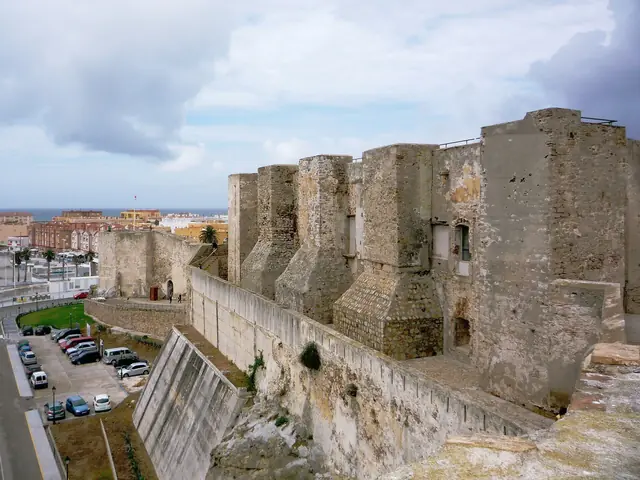
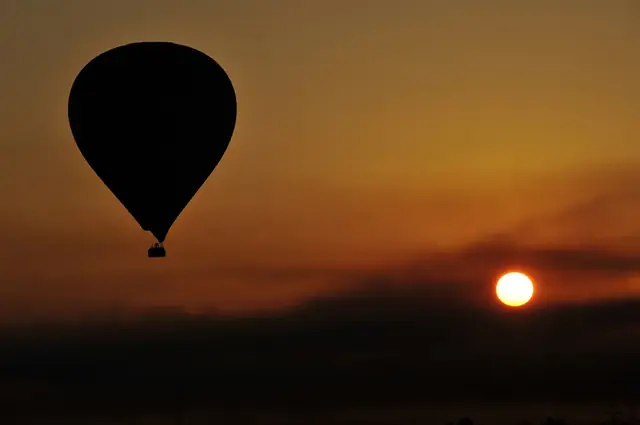
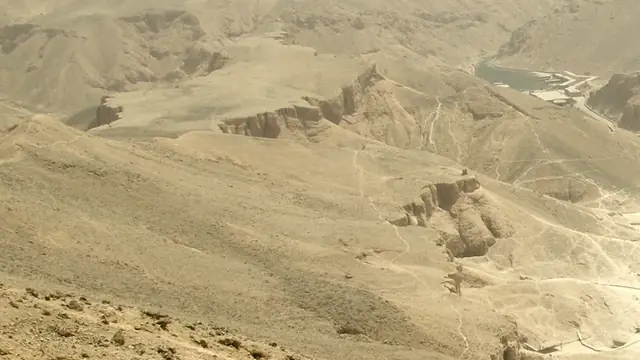
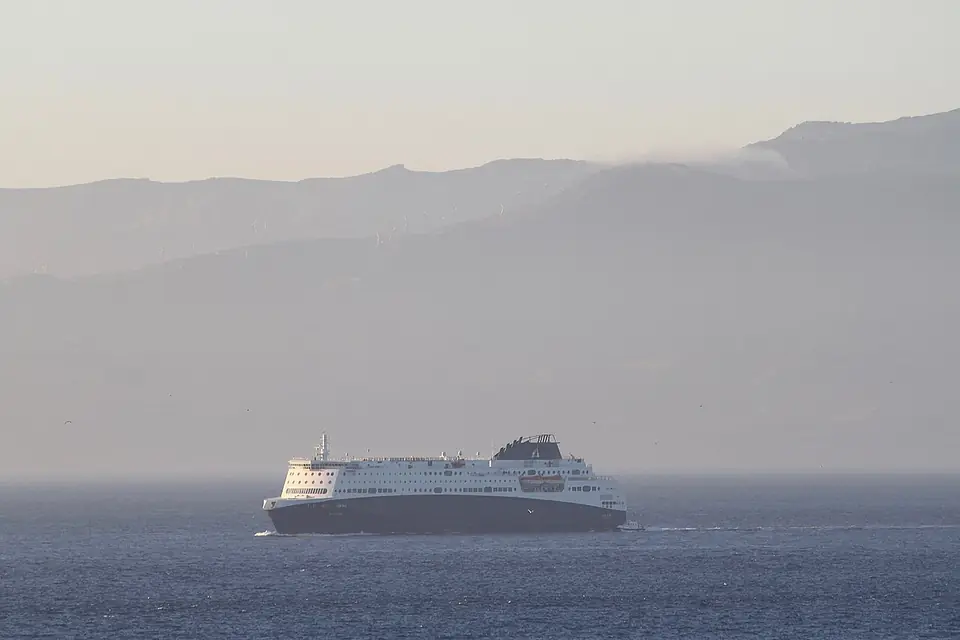
Photos on this page come from Wikimedia Commons and are used under the licence shown. We cropped and resized them to fit; the originals are at each source link.
Kiwi.com, Expedia and GetYourGuide names and logos are trademarks of their owners, shown only to name the partner each link goes to.