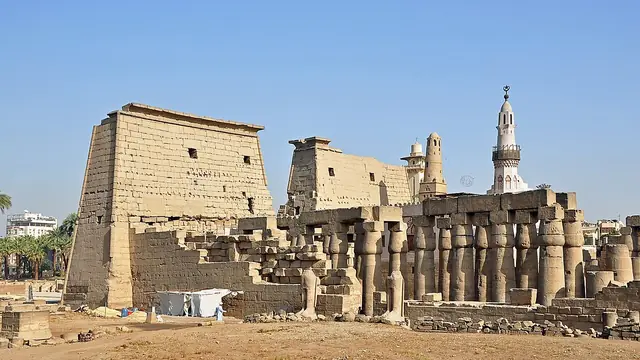
Flights

Marsa Alam is the closest airport, 68 km away. Choose an airport, then add where you're flying from.
Book your flightsNearest airports

A historic Red Sea port right at the edge of the path, so totality is short and every kilometre matters.
El Quseir is near the northern edge of the path, with only about 2m 20s to 2m 30s, so every kilometre matters. Spots further south of the old fort, towards the centre line, do better; check yours on the map.
Totality runs from 13:06:46 to 13:09:05 local time on Monday 2 August 2027. The partial eclipse begins at 11:43 and ends at 14:28, so you need eclipse glasses for everything except totality itself.
El Quseir is about 120 km from the centre line and 9 km inside the nearer edge of a path about 260 km wide, so a short drive toward the centre line adds seconds.
2 August 2027 · Spain, North Africa & Arabia
Totality in El Quseir starts at 13:06:46 EEST local time (2 Aug 2027, 10:06:46 UTC), at the town centre.
Totality across these spots is between 2m 05s and 2m 30s. Choose a spot with an open view to the south-west as much as for the extra seconds.
Why a range, not one figure? El Quseir is close to the edge of the path, where the length of totality depends on a small correction for Earth's rotation (ΔT) that will only be known precisely nearer the date. Published predictions here differ by up to 14 seconds, so we show the range rather than a single figure we can't stand behind.

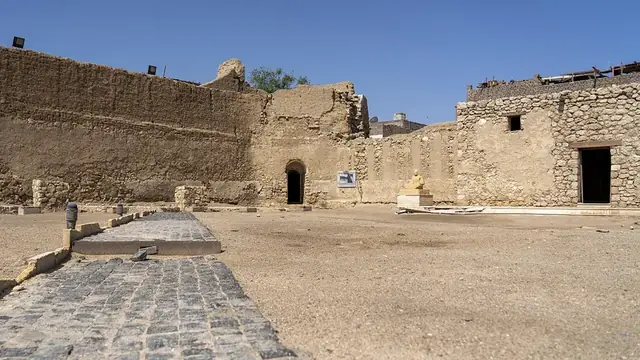
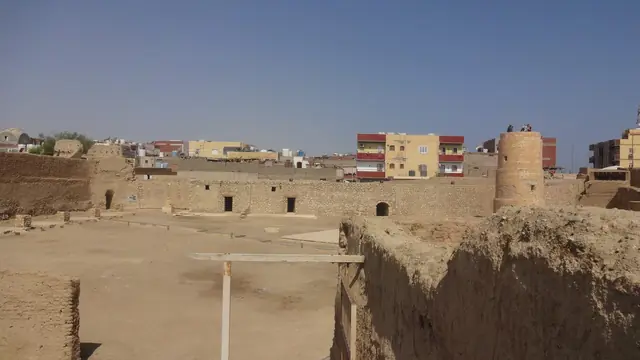
2 August 2027 · Spain, North Africa & Arabia
Eclipse day is Monday, 2 August 2027. Flights and hotels open for Sat 31 July to Sat 7 August, and you can change the dates on the next page.
Marsa Alam is the closest airport, 68 km away. Choose an airport, then add where you're flying from.
Book your flights
Every link opens the partner's site in a new tab. We may earn a small commission if you book, at no extra cost to you. Affiliate disclosure
Local time in El Quseir, at the town centre. "Covered" is the share of the Sun's disc hidden by the Moon at that moment; "Sun" is its height above the horizon and direction.
| Time | Moment | Covered | Sun |
|---|---|---|---|
| 11:43 | Partial eclipse begins The Moon takes its first bite out of the Sun. Glasses on. | 0% | 73° ESE |
| 12:06 | 1 hour to go Through glasses the Moon has taken a clear bite out of the Sun; daylight still looks normal. | 18% | 77° SE |
| 12:36 | 30 minutes to go Through glasses the Sun is a shrinking crescent. | 58% | 81° SSE |
| 12:51 | 15 minutes to go The light turns strange and flat; shadows get sharper. | 81% | 82° S |
| 13:01 | 5 minutes to go It gets noticeably darker and cooler. | 96% | 81° SSW |
| 13:05 | 1 minute to go The Moon's shadow rushes in; shadow bands may ripple on pale ground. | 99.7% | 81° SSW |
| 13:06 | Totality begins Glasses off only once complete totality is confirmed, not by the clock. The Sun's glowing corona appears. | 99.9% | 81° SSW |
| 13:09 | Totality ends The diamond ring returns. Glasses back on before the first bright sunlight reappears. | 99.9% | 81° SSW |
| 13:39 | 30 minutes after The crescent grows again; daylight returns to normal. | 57% | 76° WSW |
| 14:28 | Eclipse ends The Moon slides off the Sun. | 0% | 66° WSW |
At mid-eclipse the Sun is about 81° up towards the south-west. That is high, so you will be looking up: wide shots of the sky and skyline work well, and a long lens handles the diamond ring.
August in El Quseir is hot. Keep your camera and phone in the shade between shots: a phone that overheats can shut down in the middle of totality.
Your camera needs its own front-mounted solar filter. Eclipse glasses are for eyes only. Our filter picks are in the kit section below.
Wear certified ISO 12312-2 eclipse glasses whenever any part of the Sun is showing. Baily's beads and the diamond ring are direct sunlight, so keep your glasses on until they have gone. Take your glasses off only when the Sun is completely covered, and put them back on before the first bright sunlight reappears at third contact (C3). Complete totality here lasts 2m 19s–2m 32s.
Bring certified ISO 12312-2 glasses from home. Sellers near busy viewing spots may offer unmarked or fake viewers.
Best for: Everyone watching the partials at El Quseir.
Downside: Paper tears easily in wind; check for scratches before you look.
Best for: Families, groups, and handing spares to people nearby.
Downside: Paper frames fit kids loosely, so check the fit before the day.
Eclipse glasses are not a camera filter. Anything with a lens needs its own solar filter on the front.
Best for: Anyone shooting the partial phases with a zoom lens.
Downside: It has to fit snugly. Check it is secure before every session, and inside the path choose one you can remove and refit quickly.
Best for: Sharing a magnified crescent without a long lens.
Downside: Needs a steady hold in heat and wind. Never look through an unfiltered finder.
We only recommend ISO 12312-2 eclipse glasses, and purpose-made solar filters for cameras and other optics, from reputable makers or their authorised dealers. If you buy through one of our links, we may earn a small commission at no extra cost to you. Affiliate disclosure.
El Quseir has low cloud cover in August. Average cloud cover is 24%, where 0% is a cloudless sky and 100% is fully overcast; at the hour of the eclipse it averages 17% over the last ten years. Dust and haze are common in summer here, which can make the sky look milky and dull the corona a little.
Each bar is the average cloud cover for that August; lower is better. Gold bars: 20% or less (a good year). Grey bars: over 20%. The dashed gold line marks 20%. 2026: 30 of 31 August days (NASA POWER). Tap a bar for the exact figure.
Lowest cloud cover: August 2007 (10.7%). Highest: 2015 (40.7%).
Average cloud cover by hour; lower is better. The gold band marks the hour of the eclipse.
| Mean cloud amount, all August days 2001–2025 | 24.3% |
|---|---|
| Mean cloud at 10:00 UTC (2016–2025) | 17.3% |
| Mean temperature / mean daily max | 32.2°C / 35.8°C |
| Relative humidity (2 m) | 44.9% |
| All-sky ÷ clear-sky surface sunlight | 97% (clearness index 0.7) |
| Aerosol optical depth (550 nm)iHow much dust and haze dims sunlight. Under 0.1 is very clear, about 0.3 is hazy, over 0.5 is dusty. | 0.36 |
These satellite figures cover a square of land about 50 km across around El Quseir, not one street, so a sea breeze, a hill or a river valley can make your own spot a little clearer or cloudier.
See also cloud cover along the whole path.
C1 to C4 are the standard astronomers' names for the four moments, or "contacts", of an eclipse. First contact: the Moon first touches the edge of the Sun and the partial eclipse begins. Second contact: the Sun is completely covered and totality begins. Third contact: the Sun starts to reappear and totality ends. Fourth contact: the Moon leaves the Sun and the eclipse is over.
| Contact | UTC | Local | Covered | Sun altitude / azimuth |
|---|---|---|---|---|
| C1 | 08:43:22 | 11:43:22 | 0% | 72.7° / 115° ESE |
| C2 | 10:06:46 | 13:06:46 | 99.9% | 80.9° / 207° SSW |
| Max | 10:07:55 | 13:07:55 | 100% | 80.7° / 208° SSW |
| C3 | 10:09:05 | 13:09:05 | 99.9% | 80.6° / 210° SSW |
| C4 | 11:28:19 | 14:28:19 | 0% | 65.6° / 255° WSW |
| Magnitude | 1.0028 | |||
| Duration of totality | 139.5–151.6 s (depends on ΔT, see above) | |||
| Partial phase | 2h 44m 56s | |||
| Point | 26.1046°, 34.2779°, sea level (Africa/Cairo) | |||
We don't know your local horizon. Hills, buildings or trees can hide the Sun, so check the view towards the south-west from your exact spot.
2,403 km/h (1,493 mph) at mid-eclipse.
2 August 2027 · El Quseir
Your eclipse deserves more than guesswork. Get exact timings, cloud forecasts and expert guides to make every moment count.
Checking availability…
Free
FreeNo card neededExact times, weather updates and helpful guides, delivered free.
4 free benefits
Everything you need, right when you need it. Get your exact eclipse times, updated cloud forecasts and practical tips delivered to your inbox as the big day approaches.
Everything you need for an unforgettable eclipse. What to expect, how to watch safely, what to bring and how to make the most of the experience with friends and family.
Capture the moments you'll never want to forget. Simple camera and smartphone settings, essential equipment and practical tips for photographing the eclipse.
A free monthly guide to upcoming sky events, with general viewing tips and guides to help you prepare.
Cloud forecasts become available within forecast range. Historical cloud averages are not forecasts, and clearer skies are never guaranteed.
El Quseir is on the Red Sea road between Safaga and Marsa Alam, with Marsa Alam Airport (RMF) to the south.
From Marsa Alam airport it is about 1 h by car or taxi. Hire cars and long-distance coaches serve the main roads; on eclipse morning, roads into the path will be busy, so arrive the day before.
Next steps from El Quseir: pick your kit, check the weather, and lock a place to stay.
2m 19s–2m 32s of totality at the town centre; across the viewing spots below it is between 2m 05s and 2m 30s. The whole eclipse, including the partial phases, lasts about 165 minutes.
From 13:06:46 to 13:09:05 local time on 2 August 2027. The partial eclipse starts at 11:43 and ends at 14:28.
At its peak the Sun is almost overhead, slightly to the south-west, so buildings and hills are rarely a problem. You'll be looking nearly straight up, so a reclining chair or a mat helps.
They are the standard astronomers' names for the four "contacts" of an eclipse. First contact: the Moon first touches the edge of the Sun and the partial eclipse begins. Second contact: the Sun is completely covered and totality begins. Third contact: the Sun starts to reappear and totality ends. Fourth contact: the Moon leaves the Sun and the eclipse is over.
The narrow track swept by the Moon's dark inner shadow (the umbra). Only inside it is the Sun fully covered; just outside you get a partial eclipse.
Photos on this page come from Wikimedia Commons and are used under the licence shown. We cropped and resized them to fit; the originals are at each source link.
Kiwi.com, Expedia and GetYourGuide names and logos are trademarks of their owners, shown only to name the partner each link goes to.
Spotted a figure that looks wrong? Report a correction.
Last updated