Eclipse toolkit
Everything you need for eclipse day, in four parts: plan your trip, view properly, photograph well, and understand more about what you are watching. Every figure we publish comes from NASA data or our validated calculator.
Plan Your Trip
Where to stand, how to get there and what the weather does.

Plan Your Trip
Flights, stays and tours for the 2027 and 2028 eclipses, with dates set for eclipse week.
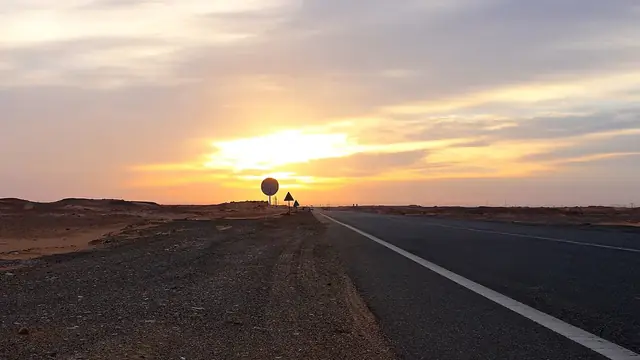
Where to watch 2027
Compare 42 places by totality, Sun height and cloud.
Flights to the 2027 eclipse
Airports inside the path, the totality each gets, and when to fly in.

Cloud odds by country
25 years of NASA POWER cloud data along the 2027 path.
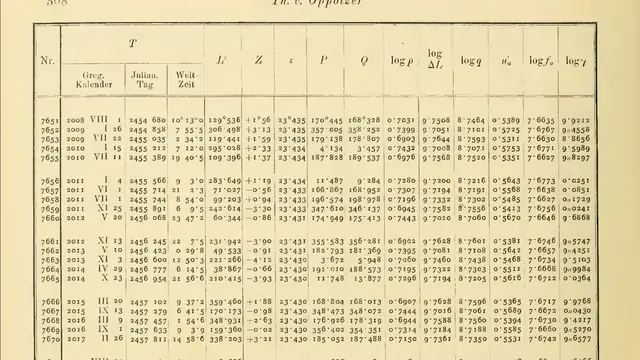
Free eclipse data sample
Totality, start time, Sun height and cloud for about 200 towns, 2027 and 2028. Free to quote.
View properly
Certified glasses, and what to do if you forget them.
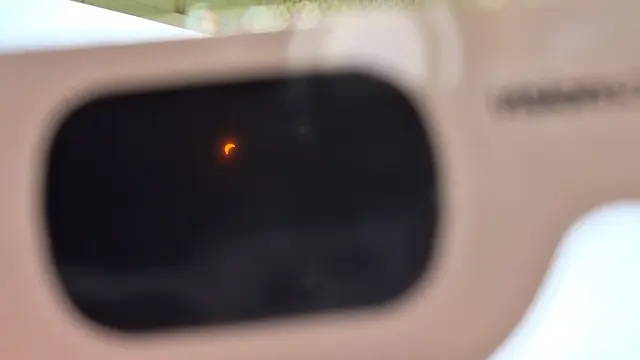
Photograph well
Filters, settings and practice you can start today.
Understand more
The basics, the types, lunar eclipses and your questions answered.
Frequently asked questions
Do I need eclipse glasses?
Yes, for every moment the Sun is even slightly uncovered. Use ISO 12312-2 certified glasses from a reputable seller. Only during totality itself is it safe to look with the naked eye.
What if I forget my glasses?
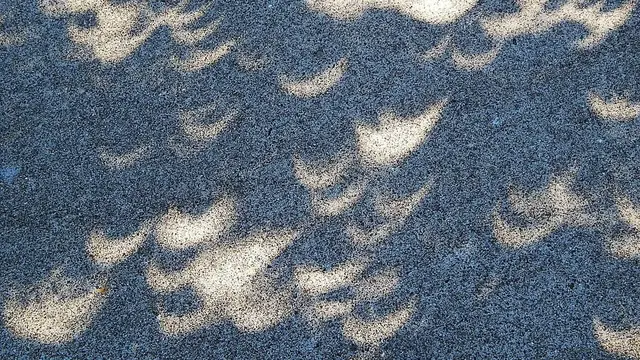
Use a pinhole projector, a colander, or the gaps between leaves to project crescent Suns onto the ground. Never look through sunglasses, film or smoked glass. Our last-minute guide covers safe options.
Can I photograph the eclipse with my phone?
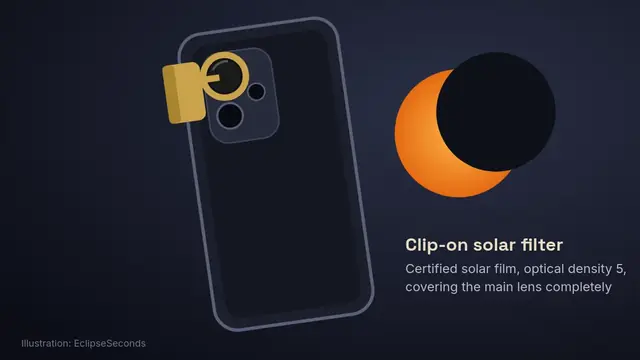
Yes. Keep a phone solar filter on whenever any bright part of the Sun is visible, including Baily's beads and the diamond ring; remove it only during confirmed complete totality inside the path. Practise on the everyday Sun before the trip. Our practice guide walks you through it.
What is the corona?
The Sun's outer atmosphere: pearly white streamers that you can only see with the naked eye during totality, when the bright disc is fully hidden.
What are Baily's beads and the diamond ring?
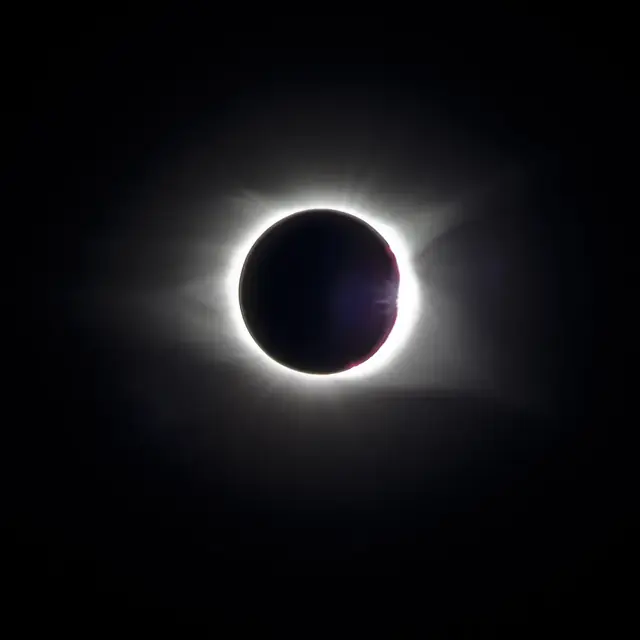
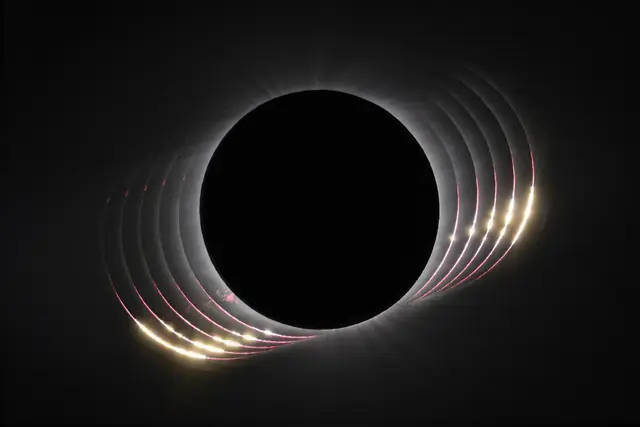
Just before C2 and just after C3, sunlight shines through valleys on the Moon's edge as bright beads. When one bead is left it looks like a diamond on a ring. Both contain direct sunlight, so keep your glasses on until the diamond ring has gone and complete totality has begun. Put your eclipse glasses back on before the first bright sunlight reappears.
Photo credits
Photos on this page come from Wikimedia Commons and are used under the licence shown. We cropped and resized them to fit; the originals are at each source link.
- The diamond ring during the total solar eclipse of 21 August 2017 by Sixflashphoto, Wikimedia Commons, CC BY-SA 4.0
- Crescent suns projected through tree leaves onto a pavement by Ron Clausen, Wikimedia Commons, CC BY-SA 4.0
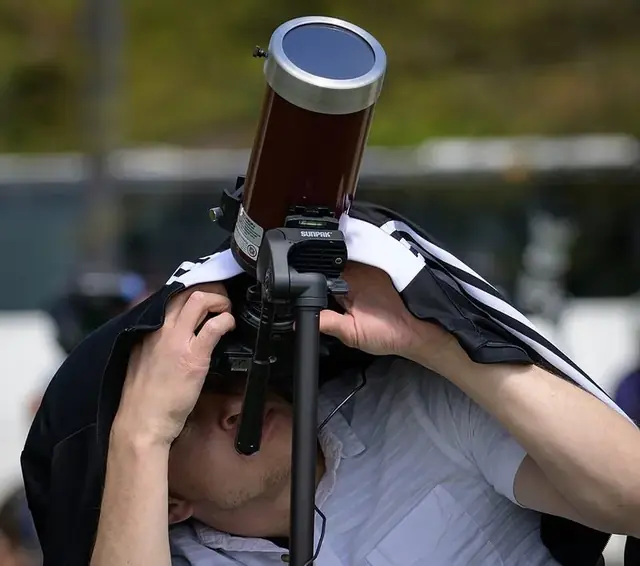
- A telescope fitted with a white-light solar filter on a tripod, 8 April 2024 eclipse by NASA/Bill Ingalls, Wikimedia Commons, Public domain
- Illustration of a clip-on solar filter on a phone by Eclipse Seconds illustration, Wikimedia Commons, Own work
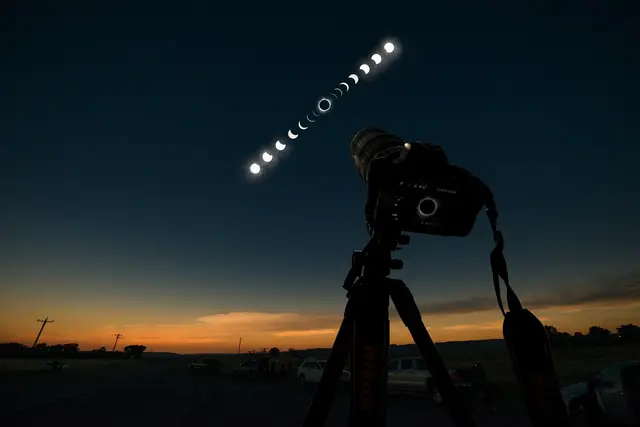
- A composite of eclipse phases taken from a tripod by Bernd Thaller from Graz, Austria, Wikimedia Commons, CC BY 2.0
- The partially eclipsed Sun seen through paper eclipse glasses by Aaron Lucas, Wikimedia Commons, CC BY-SA 4.0
- A page of solar eclipse data tables for 2008 to 2017 from Oppolzer's Canon der Finsternisse by Theodor von Oppolzer, Canon der Finsternisse (1887), Wikimedia Commons, Public domain
- Clear sky over the Western Desert, Egypt by Vyacheslav Argenberg, Wikimedia Commons, CC BY 4.0
- Baily's beads at the edge of the Moon during a total solar eclipse by P. Horálek/ESO, Wikimedia Commons, CC BY 4.0
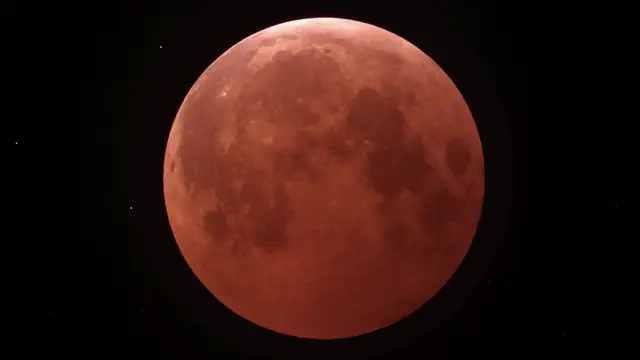
- The Moon in totality during a total lunar eclipse by Brucewaters, Wikimedia Commons, CC BY-SA 4.0
- A passenger jet taking off by Alf van Beem, Wikimedia Commons, CC0
- Dawn over the desert by Paul Grach, Wikimedia Commons, CC BY 3.0
- A hot-air balloon over Luxor by Marcosleal, Wikimedia Commons, CC BY-SA 3.0
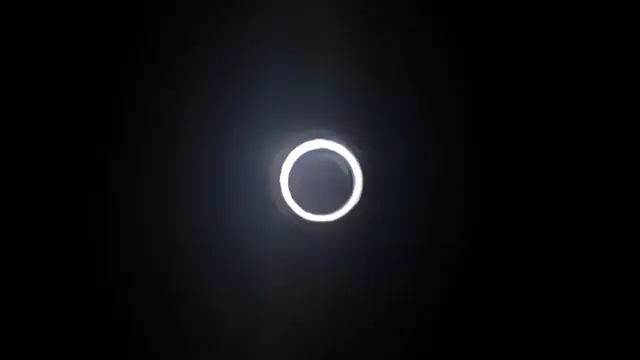
- The ring of fire during the annular solar eclipse of 2019 by Arjun Venugopal, Wikimedia Commons, CC BY-SA 4.0