Phone solar filters: what they are and how to use them safely
Published · Updated
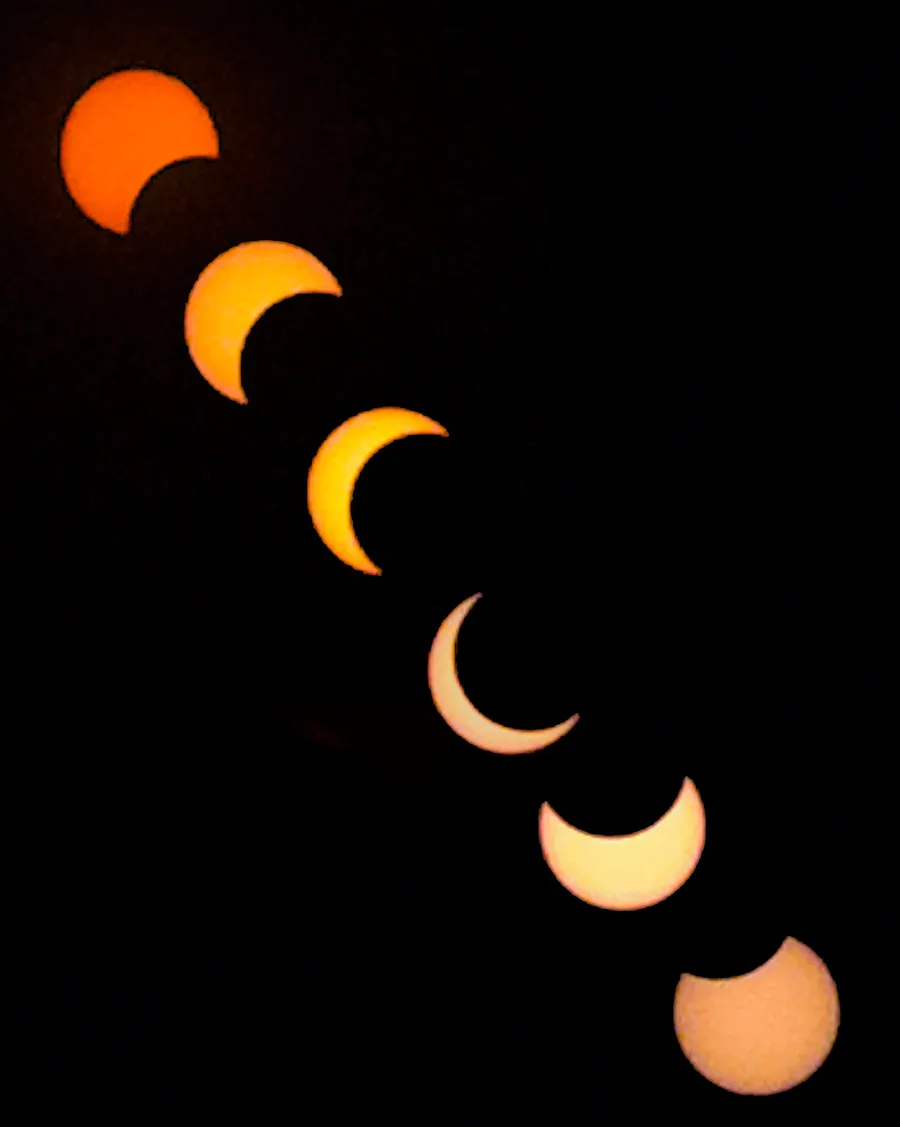
A phone solar filter is a small piece of purpose-made solar filter material in a clip-on holder that covers your phone's camera lens. It turns the blinding Sun into a crisp orange disc you can focus on, zoom into and photograph through every partial phase.
What they are
Solar film, not a dark lens
The working part is purpose-made solar filter material made for lenses. Phone, camera, binocular and telescope filters are different from eclipse glasses, which are for your eyes only. Photographic ND filters and dark plastic are not solar filters.
Clip-on holder
A spring clip or adhesive ring holds the film flat over one lens. Some come with a mini tripod or a universal clamp.
Made for the Sun
Purpose-made solar film from a reputable maker, not just something dark. Darkness alone is not proof: use a purpose-made solar filter made for your phone, from a reputable maker or its authorised dealer.
Safety first
For your camera or phone. Use a purpose-made solar filter securely fitted over the front of the lens. Camera, binocular and telescope filters are different from eclipse glasses and must be suitable for the specific optical equipment. ISO 12312-2 applies to direct-view solar viewers, not the certification of camera lens filters. Follow the filter manufacturer's fitting and safety instructions. Never use eclipse glasses or a solar viewer to look through unfiltered binoculars, a telescope or a camera. The concentrated sunlight burns through the viewer and causes serious eye injury. Use filtered live view for framing. Do not look past the screen at the Sun without eye protection.
- Purpose-made filter only. Use purpose-made solar film from a reputable maker or its authorised dealer. Our eclipse glasses guide explains how to choose a seller and check the film.
- Inspect it every time. Hold it up to a lamp: no scratches, pinholes, creases or loose film. Damaged film goes in the bin.
- Cover the whole lens. No gaps at the edges, and check that the phone hasn't switched to an uncovered lens when you zoom.
- Off only in complete totality. Keep the camera's solar filter securely fitted whenever any bright part of the Sun is visible. Remove it only during confirmed complete totality, and restore it before direct sunlight reappears. It stays on through Baily's beads and the diamond ring, and comes off only in full totality inside the path. Outside the path there is no complete totality, so the filter stays on throughout.
- Your eyes need their own protection. Wear eclipse glasses while you frame the shot. See our eclipse glasses guide.
The diamond ring at the end of totality. The diamond ring contains direct sunlight and occurs at the boundary of complete totality. This guide does not cover photographing it without a solar filter. Keep the lens filter fitted before C2 and restore it securely before C3. Never look directly at the diamond ring without proper eye protection or through an unfiltered optical viewfinder.
Keep the camera's solar filter securely fitted whenever any bright part of the Sun is visible. Remove it only during confirmed complete totality, and restore it before direct sunlight reappears. Take your glasses off only when the Sun is completely covered, and put them back on before the first bright sunlight reappears at third contact (C3).
Complete totality occurs only when the Sun's bright surface is entirely covered by the Moon. If you are uncertain whether totality has begun or is ending, keep your eclipse glasses and camera solar filter on. Use the contact times (C2 and C3) for your exact spot to be ready, then confirm totality by what you see: no part of the bright Sun visible through your eclipse glasses or filter.
How to use one
- Fit it on the main lens and lock the camera to that lens if your phone allows it.
- Steady the phone on a mini tripod or clamp. Hand-held zoomed shots blur.
- Lock focus and exposure. Tap and hold on the Sun until AE/AF lock appears, then slide brightness down until the disc is orange with a sharp edge.
- Mind the zoom limits. Stay within your phone's optical zoom (often 2x to 5x). Digital zoom beyond that only gets blurry.
- Shoot bursts and keep the sharpest frame.
- Practise on the everyday Sun weeks before the trip. Our phone practice guide walks you through a session.
Common mistakes
Uncovered second lens
The phone jumps to a different camera when you zoom, and that one has no filter.
Auto exposure left on
The Sun turns into a white blob. Lock exposure and pull brightness down.
Filter left on in complete totality
Inside the path, once totality is confirmed, the corona is a million times fainter than the Sun. With the filter on you get a black frame.
Staring past the phone
Framing the Sun by eye without glasses. Look at the screen, or wear your glasses.
Night mode and flash
Turn both off for the partial phases. They fight your exposure lock.
No rehearsal
Fumbling with the clip in the two minutes before totality. Practise it at home.
Product types
Clip-on phone solar filter
- Purpose-made solar filter material
- Spring clip fits most phones and cases
- Reusable for sunspots and future eclipses
Best for: Most people shooting the partial phases on a phone.
Downside: Clips can sit off-centre on big camera bumps. Check the edges before every shot.
We only recommend phone filters made with purpose-made solar filter material, from reputable sellers; see Astroshop phone solar filters for how to choose one. If you buy through one of our links, we may earn a small commission at no extra cost to you. See our affiliate disclosure.
Frequently asked questions
What is a phone solar filter?
A small piece of purpose-made solar filter material (or solar glass) in a clip or holder that sits over your phone's main camera lens. It cuts sunlight to a safe level for the camera, so it sees a sharp orange disc instead of a white blaze.
Is a phone solar filter safe for my eyes?
It protects the camera, not you. Looking at the screen is fine, but never look at the Sun past the phone. Wear ISO 12312-2 eclipse glasses at the same time.
Can I use my eclipse glasses as a phone filter?
No. Eclipse glasses are for your eyes, not your camera. Use a suitable solar filter made for your phone, securely fitted over the lens you shoot with, and keep your eclipse glasses for your eyes.
Do I need a filter during totality?
Only in confirmed complete totality inside the path can it come off. Keep the camera's solar filter securely fitted whenever any bright part of the Sun is visible. Remove it only during confirmed complete totality, and restore it before direct sunlight reappears. It stays on through Baily's beads and the diamond ring. Outside the path there is no complete totality, so the filter stays on throughout.
Will the filter fit a phone with three cameras?
Pick one that covers the lens you shoot with (usually the main or 3x lens). The phone may switch lenses as you zoom, so lock to one lens, or use a filter made for your phone that covers them all.
Will shooting the Sun damage my phone?
Short unfiltered shots of the bright Sun can harm the sensor, and zoomed shots are riskier. With a proper filter over the lens, shooting the partial phases is safe.
Photo credits
Photos on this page come from Wikimedia Commons and are used under the licence shown. We cropped and resized them to fit; the originals are at each source link.
- A sequence of partial eclipse phases taken with a smartphone by Douglas Duncan/IAU OAE (CC BY 4.0), Wikimedia Commons, CC BY 4.0