Eclipse glasses: safe, certified, and worth buying properly
Published · Updated
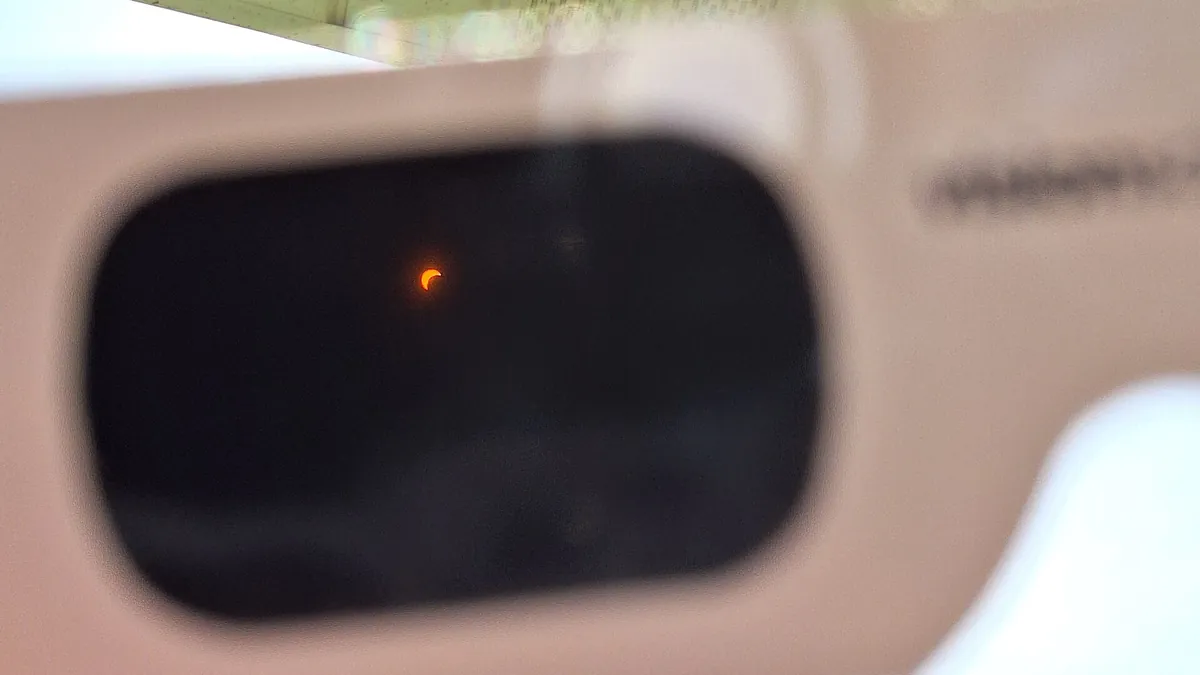
You need a pair that meets ISO 12312-2, bought from a reputable maker or its authorised dealer. Below: what to look for, how to test them, paper vs plastic, and an honest partner recommendation.
Forgotten yours? Last-minute emergency options, including pinholes and colanders.
What to look for
ISO 12312-2
The international standard for filters used to look directly at the Sun with your eyes. It covers direct-view viewers only, not camera, binocular or telescope filters. A printed ISO logo alone is not proof.
A reputable seller
Buy from a reputable maker or its authorised dealer, never an unknown marketplace listing. The seller is the practical way to avoid counterfeits.
How to test
Indoors you should see nothing through them except very bright bare bulbs, which look very faint; if you can see ordinary lamps or furniture, they are not dark enough. Outdoors, a glance of under a second should show a sharp-edged, comfortably bright Sun on a dark background. Discard scratches, pinholes or loose film. These checks can only show that a pair is unsafe, not prove that it is safe: safety comes from ISO 12312-2 glasses bought from a reputable maker or its authorised dealer.
Fit and spare
They should seal around the eyes with no light leaking at the sides. Pack a spare pair, paper tears, and windy coasts (Tarifa, the Strait) are rough on kit.
Product types
Paper eclipse glasses
Cardboard frames with black polymer film. The most common visitor pair for a single eclipse.
- Cheap; easy to pack extras
- Fine for adults who try them on first
- Widely available from reputable makers
- Tear and crease easily
- Looser fit in wind
- Not for reuse across many years if damaged
Plastic-frame viewers
Harder frames with the same ISO 12312-2 film. Better for kids, glasses-wearers and windy sites.
- More secure fit
- Reusable if undamaged
- Often clearer labelling of the standard
- Cost more than paper
- Bulkier in luggage
Our recommendation
ISO 12312-2 viewers from reputable sellers
We recommend buying ISO 12312-2 glasses from a reputable maker or its authorised dealer. In the UK and Europe, Absolute Eclipse sells ISO 12312-2 viewers; in the US and Canada, Eclipse Glasses does the same. Travellers to Australia, New Zealand and everywhere else can order from either seller before they leave, then use the checks in this guide on the pair that arrives.
- ISO 12312-2 viewers
- Options for paper and longer-life frames
- One seller for the UK and Europe, one for the US and Canada
- Order early, popular sellers sell out before big eclipses
- Check the seller and the ISO 12312-2 marking yourself before paying
We recommend these sellers for their regions because they sell ISO 12312-2 viewers. If you buy through our links, we may earn a small commission, at no extra cost to you. Affiliate disclosure.
Paper or plastic eclipse glasses
| Option | Safe for direct view? | Best for | Notes |
|---|---|---|---|
| Paper ISO 12312-2 glasses | Yes, if undamaged | Most visitors | Buy from a reputable seller; pack a spare |
| Plastic-frame ISO 12312-2 | Yes, if undamaged | Kids, wind, reuse | Same filter film, sturdier frame |
| Sunglasses / ND / smoked glass | No | — | Never safe for the Sun |
| Phone or camera without solar filter | No (sensor + eyes at risk) | — | Needs a front-mounted solar filter (phone solar filters on Astroshop) |
How dark is "dark enough"?
View full-size diagram
Scroll sideways to see the whole diagram.
Safety myths
“Only a glance is fine”
Retinal burns can happen without pain. There is no safe unfiltered glance at the partial Sun.
“My camera ND filter is enough”
Photographic ND filters are not solar filters. Use a purpose-made front solar filter for any optic.
“The ISO logo on the box means it’s safe”
Counterfeits copy logos. Buy from a reputable maker or authorised dealer, then inspect the film yourself.
“I can share one pair down a line of people”
Possible if it still seals, but extras are cheap, and kids need their own.
Check them before the day
- Test on a bright indoor lamp, then a glance of under a second at the uneclipsed Sun. These checks can only show that a pair is unsafe, not prove that it is safe: safety comes from ISO 12312-2 glasses bought from a reputable maker or its authorised dealer.
- Hold them up to a clear sky: you should not see bright clouds or indoor detail through the film.
- Cameras, binoculars and telescopes need their own front filters, see the photography guide. Solar film, camera filters, binocular filters and telescope filters are on Astroshop.
Frequently asked questions
Which standard should eclipse glasses meet?
ISO 12312-2 (in Europe, often marked EN ISO 12312-2 with CE). This is the international standard for filters used for direct viewing of the Sun.
What if I forget my eclipse glasses?
Can I use sunglasses?
No. Even stacked dark sunglasses let through thousands of times more sunlight than a safe solar filter.
When can I take the glasses off?
Take your glasses off only when the Sun is completely covered, and put them back on before the first bright sunlight reappears at third contact (C3). Complete totality occurs only when the Sun's bright surface is entirely covered by the Moon. If you are uncertain whether totality has begun or is ending, keep your eclipse glasses on.
Are cheap online glasses safe?
Only if they come from a reputable maker or its authorised dealer and meet ISO 12312-2. Counterfeits with copied ISO logos have appeared before past eclipses, so check the seller, then inspect the film yourself.
Paper or plastic frames?
Both are safe if the filter meets ISO 12312-2. Paper is cheap and fine for one eclipse; plastic frames last longer and fit more securely, especially for kids and windy sites.
What about children?
Each child needs their own fitted pair and an adult watching them through every partial phase. Practise putting them on before the day.
Can I use eclipse glasses on a camera or binoculars?
No. Never use eclipse glasses or a solar viewer to look through unfiltered binoculars, a telescope or a camera: the concentrated sunlight burns through the viewer and causes serious eye injury. Camera, binocular and telescope filters are different from eclipse glasses and must be suitable for the specific optical equipment.
Photo credits
Photos on this page come from Wikimedia Commons and are used under the licence shown. We cropped and resized them to fit; the originals are at each source link.
- The partially eclipsed Sun seen through paper eclipse glasses by Aaron Lucas, Wikimedia Commons, CC BY-SA 4.0