You can photograph the eclipse. Start practising today.
The Sun is up most days, so you can rehearse every shot now with the same filter you'll use in 2027. A few relaxed sessions, and eclipse day becomes a plan, not a panic.
Here's the secret most eclipse photographers learn the hard way: the partial Sun you can shoot this weekend looks exactly like the partial eclipse through a filter. Master that, and you've done most of the work.
Your practice plan in six steps
Get a solar filter
A front-mounted filter for your lens, or a purpose-made solar filter made for your phone. This is the only kit you truly need to start.
Find the Sun safely
Aim using the camera's shadow, not your eye: when the shadow of the lens is smallest and round, you're pointing at the Sun.
Lock focus and exposure
Tap and hold on the Sun (phone) or switch to manual focus (camera). Turn the exposure down until the disc looks orange, not white.
Hunt for sunspots
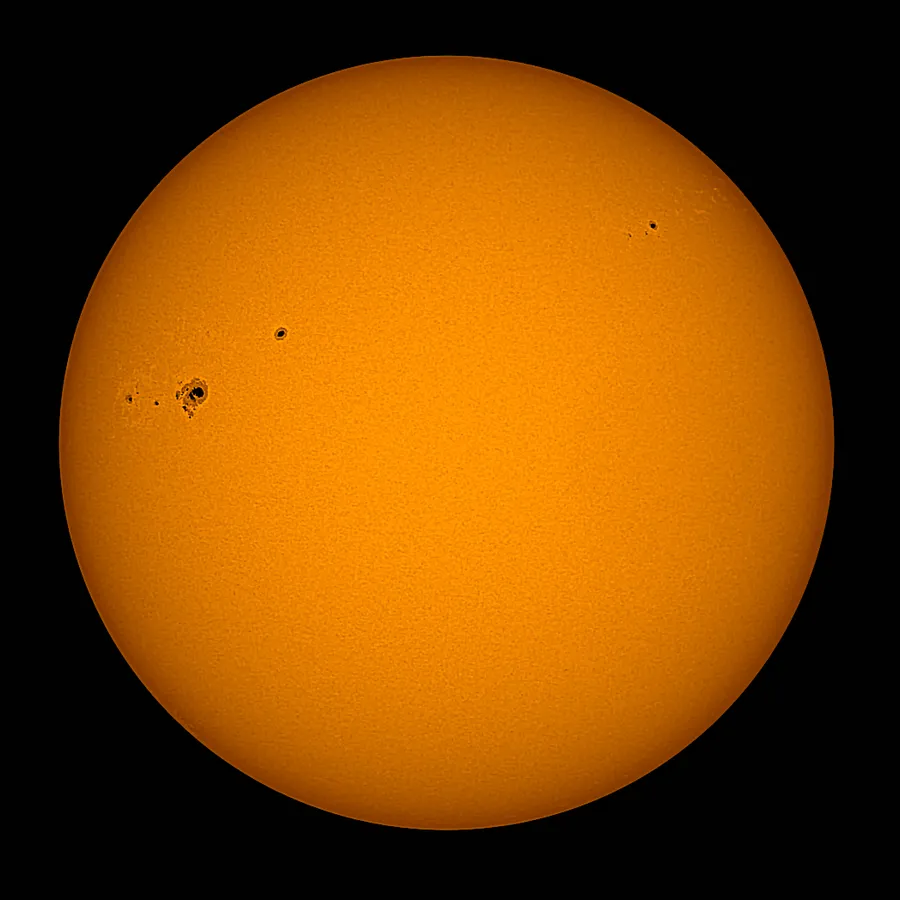
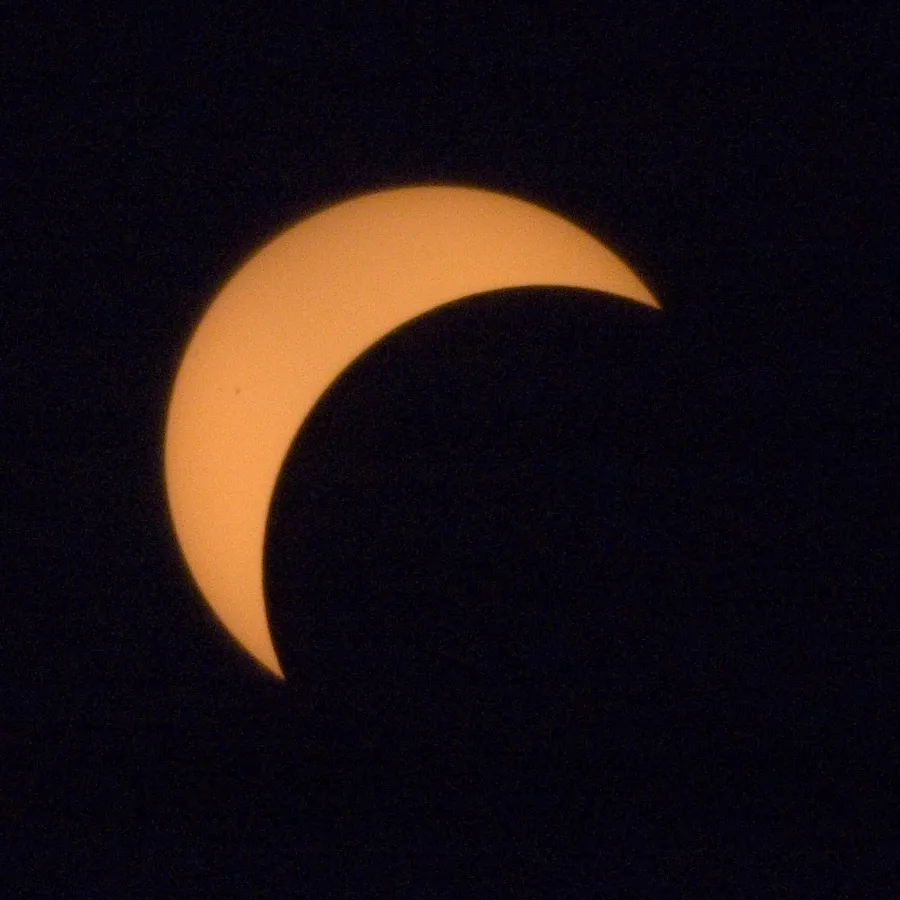
Zoom in. On most days you'll see small dark spots. If you can capture those, you can capture an eclipse crescent.
Rehearse totality
Rehearse removing the filter and refitting it indoors, or with the lens pointed away from the Sun, never while it is aimed at the uncovered Sun. On the day it comes off only once complete totality is confirmed, never just because the clock says C2, and goes back on securely before C3, so practise the move quickly and by feel. Then practise the shot sequence with a timer.
Review and repeat
Look at your shots on a big screen. Sharp edge? Orange, not blown out? Two or three sessions and you're ready.
Filters first
A simple filter turns a blinding Sun into this
A proper solar filter makes the Sun a sharp orange disc you can focus on, zoom into and even catch sunspots on. Without one, you risk your camera, and your eyes.
- 1On the front of the lens, binoculars or telescope. Never just at the eyepiece.
- 2Made for your optics. Camera, binocular and telescope filters are different from eclipse glasses and must suit the specific equipment. ISO 12312-2 applies to direct-view viewers, not camera lens filters.
- 3Off only for totality. Securely back on before the first bright sunlight at third contact (C3).
Camera solar filter
- Purpose-made solar filter, suitable for your lens
- Sized to cover the whole front of the lens
- Reusable for sunspots and future eclipses
Best for: Anyone shooting the partial phases with a zoom lens.
Downside: It has to fit snugly. Check it is secure before every session, and inside the path choose one you can remove and refit quickly.
Photo: David Wipf · CC BY 2.0
Binocular and telescope filters
- Fits over the front of each tube
- Sharp, detailed crescent views
- Great for sharing with a group
Best for: A close, steady look at the crescent and sunspots.
Downside: More kit to carry, and it needs a steady mount.
Astroshop · BinocularsAstroshop · Telescopes
Photo: Nicole Sharp from Cumberland, Maryland, United States of America (USA) · CC BY-SA 2.0
We only recommend purpose-made solar filters from reputable sellers; follow the maker's fitting and safety instructions. Eclipse glasses must never be used to look through unfiltered binoculars, telescopes or camera optics. If you buy through one of our links, we may earn a small commission at no extra cost to you. Affiliate disclosure.
Practise on sunspots and the everyday Sun
Sunspots are cooler, darker patches on the Sun, and they're perfect practice targets: small, sharp-edged and changing every day. The Sun is still busy after the recent peak of its 11-year cycle, so there are usually plenty to find. If your photos show crisp sunspots, your focus and exposure are right for eclipse day.
2 August 2027
Don't miss a single second of your eclipse.
Your eclipse deserves more than guesswork. Get exact timings, cloud forecasts and expert guides to make every moment count.
Checking availability…
Free
FreeNo card neededEverything you need to get eclipse-ready.
Exact times, weather updates and helpful guides, delivered free.
4 free benefits
Eclipse Essentials
Everything you need, right when you need it. Get your exact eclipse times, updated cloud forecasts and practical tips delivered to your inbox as the big day approaches.
Eclipse Handbook
Everything you need for an unforgettable eclipse. What to expect, how to watch safely, what to bring and how to make the most of the experience with friends and family.
Photography Guide
Capture the moments you'll never want to forget. Simple camera and smartphone settings, essential equipment and practical tips for photographing the eclipse.
Sky Events Digest
A free monthly guide to upcoming sky events, with general viewing tips and guides to help you prepare.
Cloud forecasts become available within forecast range. Historical cloud averages are not forecasts, and clearer skies are never guaranteed.
Your shot plan for totality
Write this on a card and tape it to your tripod. Times come from your spot on the totality map.
| C1 to 10 minutes before C2 | Filter on. One frame every 5 minutes to build a crescent sequence. Glasses on for your eyes. |
| Last minute before C2 | Filter still on. Watch for the shadow racing in and the light turning strange. Ready your bracket settings. |
| C2: totality begins | Remove the filter only during confirmed complete totality, after the last Baily's bead has gone. Shoot prominences at fast shutter speeds. |
| Mid-totality | Bracket the corona from fast to slow. Then put the camera down for at least a minute and just look. |
| Just before C3 | Filter securely back on, and glasses on, before the first bright sunlight at C3. The returning diamond ring is direct sunlight. |
| C3 to C4 | Filter on. A few frames of the shrinking crescent to finish your sequence. |
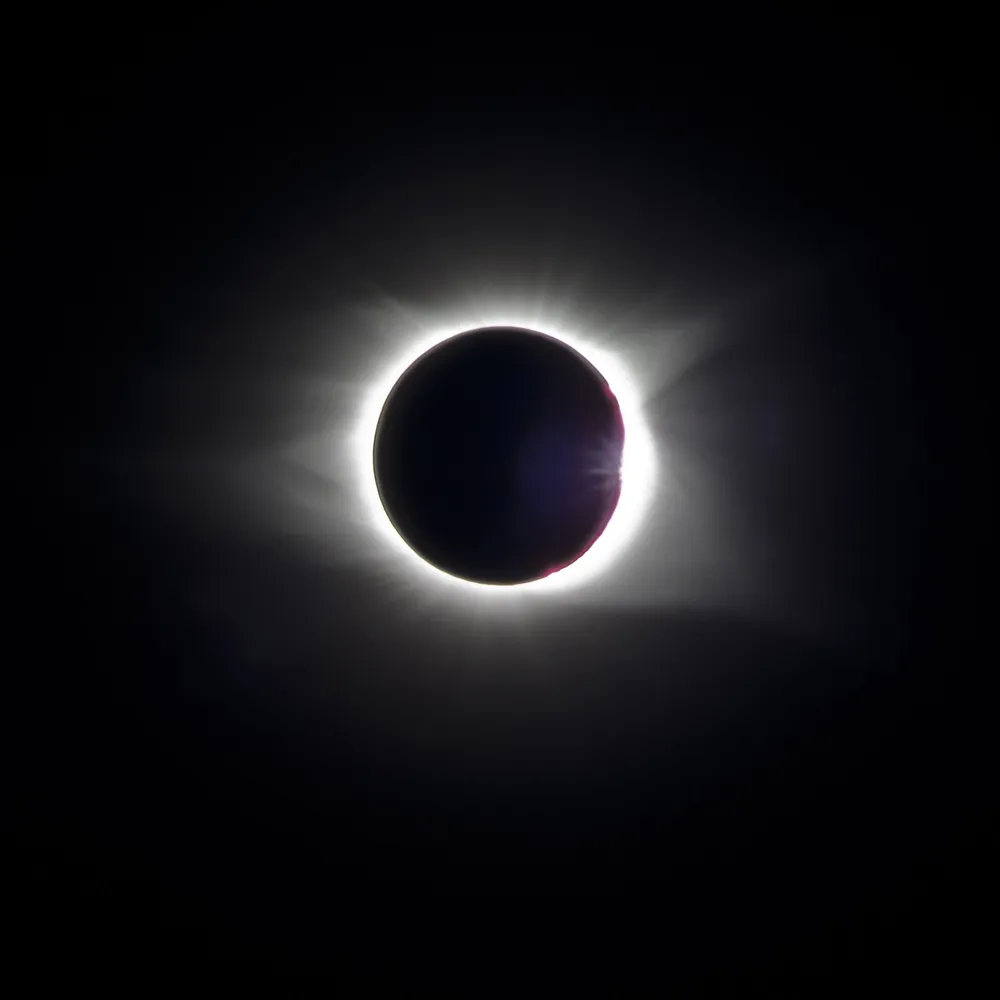
The diamond ring at the end of totality. The diamond ring contains direct sunlight and occurs at the boundary of complete totality. This guide does not cover photographing it without a solar filter. Keep the lens filter fitted before C2 and restore it securely before C3. Never look directly at the diamond ring without proper eye protection or through an unfiltered optical viewfinder.
Keep the camera's solar filter securely fitted whenever any bright part of the Sun is visible. Remove it only during confirmed complete totality, and restore it before direct sunlight reappears. Take your glasses off only when the Sun is completely covered, and put them back on before the first bright sunlight reappears at third contact (C3).
Complete totality occurs only when the Sun's bright surface is entirely covered by the Moon. If you are uncertain whether totality has begun or is ending, keep your eclipse glasses and camera solar filter on. Use the contact times (C2 and C3) for your exact spot to be ready, then confirm totality by what you see: no part of the bright Sun visible through your eclipse glasses or filter.
Common mistakes (and easy fixes)
Practice checklist
- Solar filter made for your lens, securely fitted
- Eclipse glasses for your eyes
- Tripod or mini tripod
- Remote release or 2-second timer
- Spare batteries and an empty memory card
- Manual focus set and taped
- Settings written on a card
- Alarm 2 minutes before C2 and C3
- Shade for the camera between shots
- A plan to put the camera down and watch
Then protect your eyes too
Your camera needs a filter, and so do you. Every person in your group needs ISO 12312-2 eclipse glasses for the partial phases. Heading to Egypt? See what shooting from Karnak Temple looks like, or explore the 2027 eclipse.
Frequently asked questions
Can I practise photographing the Sun safely?
Yes, with a proper solar filter on the front of your lens or phone. Never point an unfiltered camera, binoculars or telescope at the Sun, and never look through an optical viewfinder without a filter.
How long before the eclipse should I start practising?
Any time now. Three or four sessions spread over a few months is plenty. Do a final full rehearsal with your actual kit a week or two before you travel.
Do I need an expensive camera?
No. A modern phone with a purpose-made phone solar filter gets a lovely keepsake. A camera with a 200 mm or longer zoom gets you a detailed crescent and corona.
What are sunspots?
Cooler, darker regions on the Sun's surface caused by magnetic activity. They make ideal practice targets because they show whether your focus is sharp.
What are Baily's beads and the diamond ring?
Just before C2 and just after C3, sunlight shines through valleys on the Moon's edge as bright beads. When one bead is left it looks like a diamond on a ring. Both contain direct sunlight, so keep your glasses on until the diamond ring has gone and complete totality has begun. Put your eclipse glasses back on before the first bright sunlight reappears.
What is the corona?
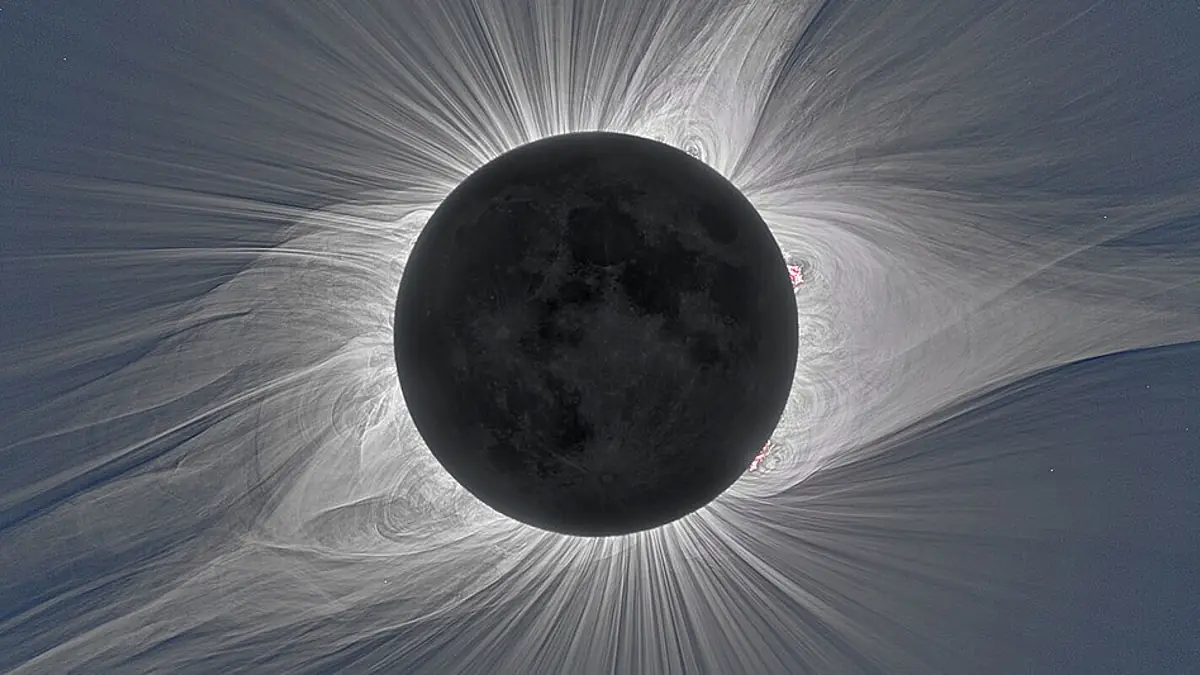
The Sun's outer atmosphere: pearly white streamers that you can only see with the naked eye during totality, when the bright disc is fully hidden.