5m 10s longest totality, at greatest eclipse3m 48sSydney, almost on the centre line4m 05sBourke, longest of our towns
Baily's beads photo: P. Horálek/ESO · CC BY 4.0 · Wikimedia Commons
On 22 July 2028 the Moon's umbra crosses Australia from the Kimberley to New South Wales and continues to the South Island of New Zealand. Greatest eclipse lasts 5m 10s near 15.6°S, 126.7°E. At greatest eclipse the shadow moves at about 2,169 km/h (1,348 mph).
Our pick
Lowest cloud cover: Wyndham (3m 19s–3m 24s, 15% July cloud cover). Longest of our towns: Bourke (4m 05s). Easiest big city: Sydney (3m 48s; the city sits almost on the centre line, so totality barely changes from suburb to suburb).
Find your seconds
Tap the map or search a place
Path Centre line Your spot
Tap anywhere for your exact seconds, contact times and local sunrise and sunset.
Check your exact spot. Near the edge of the path, one kilometre can change totality by tens of seconds.
Cloud figures are averages. They are long-term monthly means, not a forecast.
ECLIPSE:SECONDSESAS · Eclipse Seconds Alerts Service
The Moon is on schedule. Are you?
Get your exact eclipse times and cloud forecasts by email. Plus, everything you need to prepare for the big day with your free Eclipse Handbook and Photography Guide.
Free eclipse alerts
Free eclipse handbook
Free photography guide
ECLIPSE:SECONDSESAS · Eclipse Seconds Alerts Service
22 July 2028
Don't miss a single second of your eclipse.
Your eclipse deserves more than guesswork. Get exact timings, cloud forecasts and expert guides to make every moment count.
Checking availability…
Free
FreeNo card needed
Everything you need to get eclipse-ready.
Exact times, weather updates and helpful guides, delivered free.
4 free benefits
Eclipse Essentials
Everything you need, right when you need it. Get your exact eclipse times, updated cloud forecasts and practical tips delivered to your inbox as the big day approaches.
Eclipse Handbook
Everything you need for an unforgettable eclipse. What to expect, how to watch safely, what to bring and how to make the most of the experience with friends and family.
Photography Guide
Capture the moments you'll never want to forget. Simple camera and smartphone settings, essential equipment and practical tips for photographing the eclipse.
Sky Events Digest
A free monthly guide to upcoming sky events, with general viewing tips and guides to help you prepare.
Premium
a month
Your eclipse. Your location. Your perfect plan.
Personalised guidance, smarter cloud monitoring and everything you need to make the most of the big day.
Everything in Free, plus 5 additional benefits:
The Tailored Eclipse Handbook
Your complete eclipse guide, personalised to your viewing location. Exact timings, where to look, what to expect and a printable plan for the big day, so you're ready for every moment.
Cloud Watch+
Stay one step ahead of the clouds. Monitor forecasts for your eclipse and home locations, and discover nearby places with a better chance of clear skies as the big day approaches.
Photo Practice Plan
Get ready for the perfect shot before eclipse day. Discover when to practise, where the Sun will be in the sky and how to prepare your camera or phone.
Sky Events+
There's more to the sky than eclipses. Discover upcoming meteor showers, planetary events and other celestial highlights, with viewing tips and cloud forecasts for your location.
Referral Program
Earn 50p every month for each friend you refer who stays on Premium. Paid monthly to your bank via Stripe. Terms apply.
Coming soon
Cancel any time · full refund within 14 days
Cloud forecasts become available within forecast range. Historical cloud averages are not forecasts, and clearer skies are never guaranteed.
Every town compared
Seconds of totality at each town centre, best first, with average July cloud cover from NASA satellite data. Open a town page for a full timeline, viewing spots and local advice.
Town centres, sea level, smooth lunar limb. Sydney sits almost on the centre line, so totality barely changes across the city; near the path edges (Kununurra, Wyndham) a short drive changes it by minutes.
Where to watch, region by region
From late morning in the dry Kimberley to a low late-afternoon Sun over Otago. Each town page has viewing spots with their own seconds.
The Kimberley, Western Australia
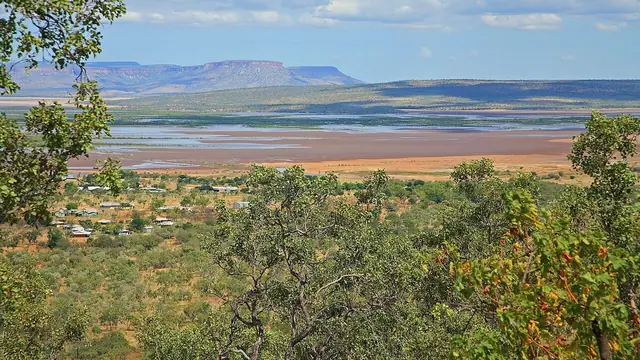
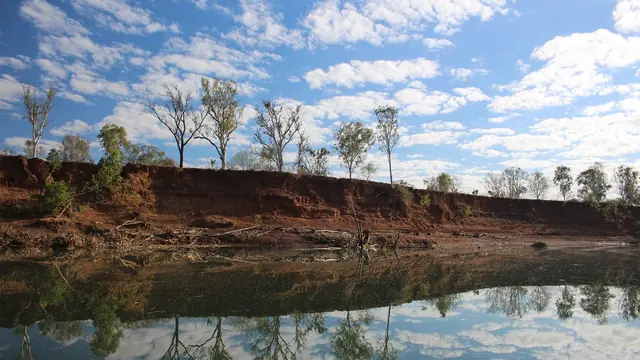
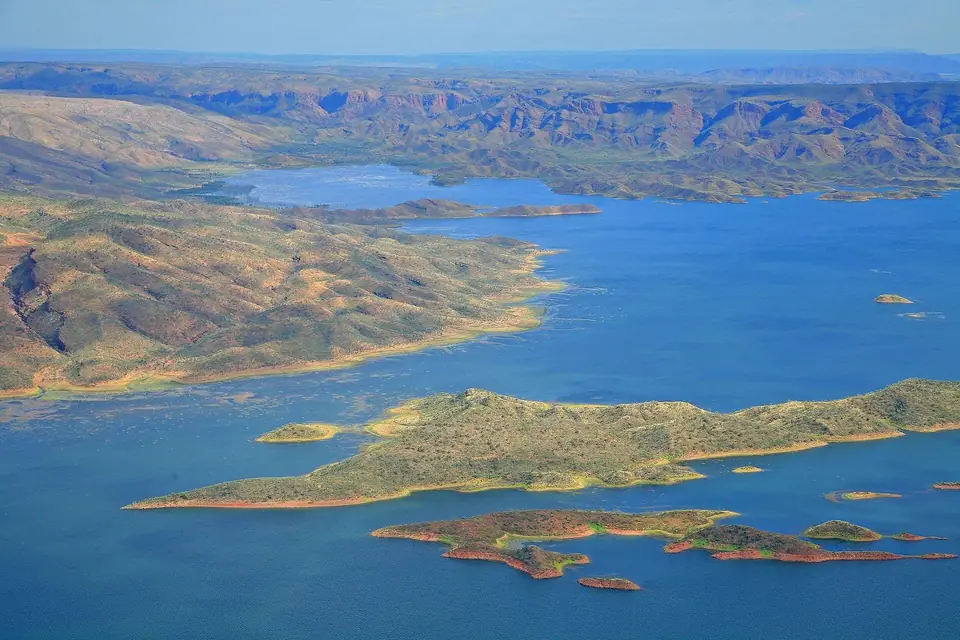
Wyndham: Wyndham, at the head of the Cambridge Gulf, is inside the 2028 path about 26 km from its northern edge, so totality here is about 3m 19s, against just over 5 minutes on the centre line about 90 km to the south-west. Five Rivers Lookout gives a huge view over the gulf; the town is small, so arrive with fuel and supplies.
Kununurra: Kununurra in the East Kimberley is inside the 2028 path but only about 18 km from its northern edge, so totality in town is short, just under 3 minutes. Drive south for more: Lake Argyle Village gets about 4m 16s, and the centre line, about 95 km south-west of town, just over 5 minutes.
Northern Territory: the Stuart Highway
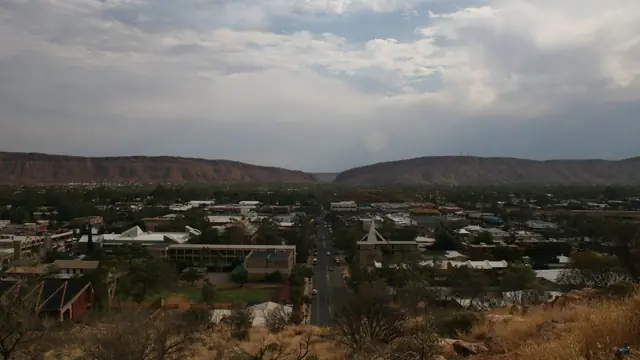
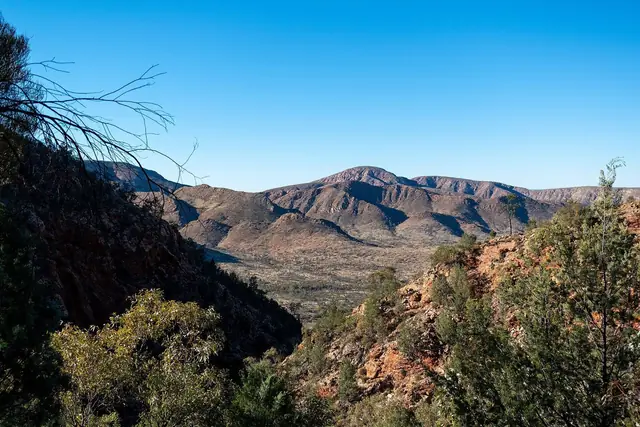
Alice Springs (drive-in gateway — outside the path of totality): Alice Springs is a drive-in gateway, outside the path of totality: the town and its airport see a deep partial eclipse (about 95% of the Sun's diameter covered) but no totality. Totality starts about 280 km north on the Stuart Highway, just south of Barrow Creek (283 km, only about 1½ minutes there). For close to 5 minutes, carry on to Karlu Karlu / Devils Marbles, about 405 km and 4 to 4½ hours by road.
Channel Country, Queensland
Birdsville: Birdsville is just outside the 2028 path: the southern edge passes about 3 km north of town, so the town itself sees a very deep partial eclipse but no totality. Head north for totality: on the Eyre Developmental Road it reaches about 4m 16s some 75 km north of town. Huge horizons, tiny town; logistics and fuel matter more than the view.
Outback New South Wales
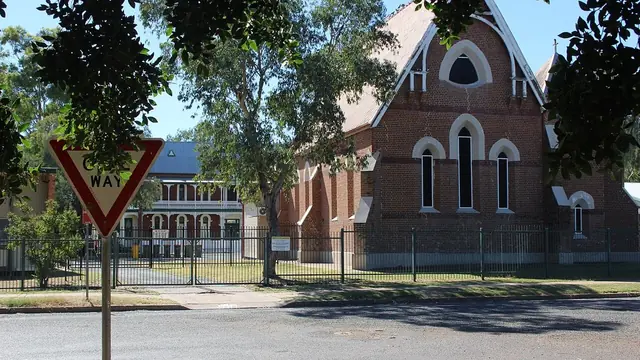
Bourke: Bourke in north-west NSW is about 16 km from the centre line of the 2028 path, so the town gets about 4m 05s of totality, within a few seconds of the most this part of the path offers. The plains are flat, so almost any open ground in town has a clear view between north and north-west.
Sydney
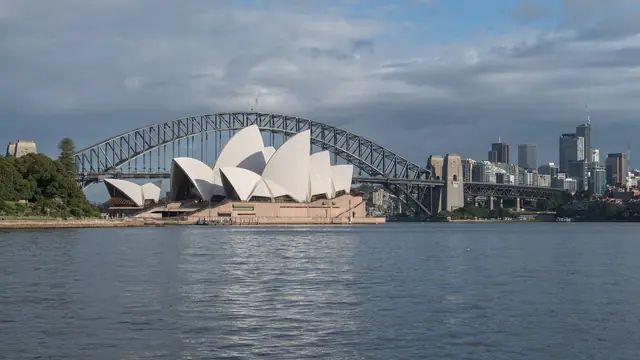
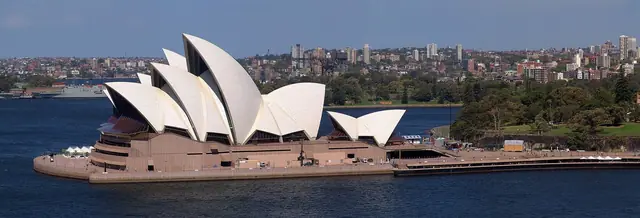
Sydney: Sydney sits almost on the centre line of the 22 July 2028 path (about 5 km from it), so the whole city gets about 3m 48s of totality and it barely changes from Parramatta to Bondi. Totality only shortens toward the path edges, around Gosford to the north and Wollongong to the south. Choose your spot for its view and weather, not for extra seconds.
South Island, New Zealand
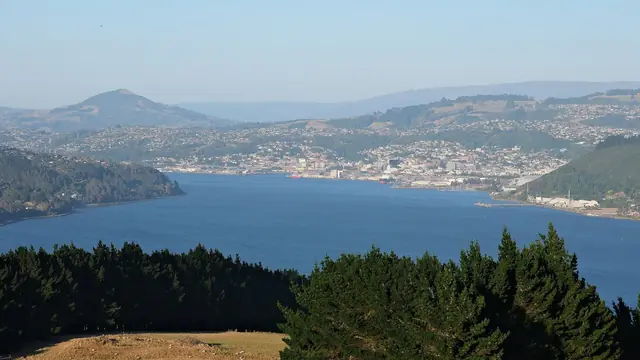
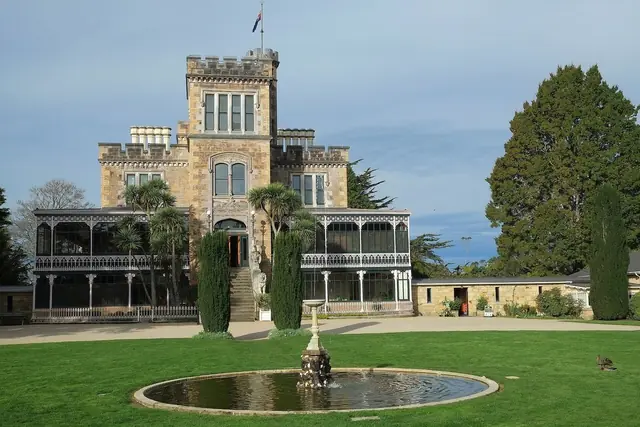
Dunedin: Dunedin on New Zealand's South Island is almost on the centre line, about 4 km from it, and gets about 2m 51s of totality late in the afternoon. The Sun is only about 8° above the north-west horizon, so your view of the hills matters far more than the seconds: choose a high or western spot.
Weather and cloud cover
22 July is midwinter. The inland north and centre are usually the clearest; the coasts of New South Wales and New Zealand are cloudier, so keep a plan to drive on the day.
Cloud cover in July · our towns in the path (lower is better)
Local times in Sydney (AEST), from our NASA-based engine. Elsewhere the times shift by minutes to hours; tap the map for yours.
12:40:46 First contact: the Moon takes its first bite out of the Sun. Glasses on.
13:59:37 Second contact: Baily's beads and the diamond ring, then totality. Glasses stay on until complete totality is confirmed.
14:03:25 Third contact: totality ends with a second diamond ring. Glasses back on before the first bright sunlight reappears.
15:14:43 Fourth contact: the partial eclipse ends.
Plan Your Trip
22 July 2028 · Australia & New Zealand
Distances are long and towns in the path are small. Here is a clear checklist, then flights, stays and tours.
When to book
Outback and Kimberley towns have few rooms and the path brings thousands of visitors. Book refundable stays early, then fix flights and a car once your spot is set.
Getting there
Fly into Sydney, Darwin or Kununurra for Australia, or into Alice Springs as a drive-in gateway (it is outside the path of totality: Karlu Karlu / Devils Marbles is about 405 km north by road), and Dunedin or Queenstown for New Zealand. Long drives are normal in the outback: plan fuel and water.
Midwinter weather
July days inland are mild and dry, but desert nights can fall close to freezing. The New South Wales coast and Otago see more cloud, so keep a plan to drive on the day.
Visas and entry
Most visitors need an Australian ETA or eVisitor, and an NZeTA for New Zealand. Check the official government sites before you book.
Time zones on the day 5 zones
Western Australia (Kimberley)
AWST, UTC+8
Northern Territory
ACST, UTC+9:30
Queensland
AEST, UTC+10
New South Wales (Sydney, Bourke)
AEST, UTC+10
New Zealand
NZST, UTC+12
Standard (winter) time everywhere on 22 July: no daylight saving in either country.
Flights, stays and tours
Book flights, stays and tours
Flights
Sydney is the big gateway. For the Kimberley, fly on to Kununurra; Alice Springs is a drive-in gateway outside the path, about 405 km by road from Karlu Karlu / Devils Marbles; Dunedin is the New Zealand option. Choose an airport, then add where you're flying from.
You need certified ISO 12312-2 eclipse glasses for every partial phase. Only during totality is it safe to look with bare eyes. Sunglasses, smoked glass and exposed film are never safe.
Paper or plastic viewers with a black polymer filter that meets the ISO 12312-2 safety standard. The standard covers direct-view viewers for your eyes only: cameras, binoculars and telescopes need their own purpose-made solar filters.
Safe for direct viewing of the partial phases
Lightweight, cheap, easy to pack extras
Kids' sizes widely available
Scratch or puncture and they are unsafe, so check before use
Not for cameras or binoculars (use a proper solar filter)
A pinhole projector, a kitchen colander or tree-leaf crescents let you watch the partial phases without looking at the Sun. Use ISO 12312-2 eclipse glasses or a suitable handheld solar viewer whenever any bright part of the Sun is visible.
Free options you can make in minutes
Great for groups and children
You do not see the corona this way, only the crescent Sun
Sunglasses, smoked glass and exposed film are never safe
A front-mounted white-light solar filter (Baader AstroSolar film or a glass filter) for your longest lens or binoculars. Must cover the front aperture fully, never use an eyepiece-only filter.
Safe partial-phase images and video
Reusable for future eclipses and sunspots
Must come off for totality (and go back on before the first bright sunlight at C3)
It has to fit snugly. Check it is secure before every session, and inside the path choose one you can remove and refit quickly.
Wide bracket: from the diamond ring and prominences to the outer corona. A sturdy tripod helps; a phone on a mini-tripod is enough for a keepsake. Leave gaps between shots to actually watch.
Corona detail you will never see with glasses
Wide and telephoto both work
Easy to over-shoot and miss the experience
A low winter Sun, as at Dunedin, softens long telephotos through more air
The 22 July 2028 eclipse belongs to Saros series 146, the same family as the 11 July 2010 eclipse over the South Pacific. Sydney has not seen a total eclipse since 1857, and Dunedin not for more than 800 years.
Greatest eclipse and shadow speed
Greatest eclipse
15.6° S, 126.7° E
Maximum duration
5m 10s
Sun altitude at greatest eclipse
52.7°
Shadow speed at greatest eclipse
2,169 km/h (1,348 mph)
Saros series
146
Dunedin, Sun height at mid-eclipse
8°
Computed from NASA Besselian elements (Fred Espenak, GSFC). See our method.
The eclipse in charts 5 charts
The eclipse in charts
Where the shadow goes
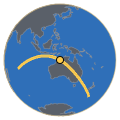
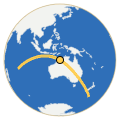
The gold band is the path of totality on the globe. The dot marks greatest eclipse.
How long totality lasts for someone standing on the centre line, from sunrise over the Indian Ocean (left) to sunset over the Pacific (right).
How fast the shadow moves
The shadow is slowest where the Sun is high and races at the sunrise and sunset ends of the path.
How much of the Sun is covered
Outside the path of totality, a band about 230 km wide, you only get a partial eclipse. Even 90% is nothing like totality.
88%Darwin
81%Brisbane
81%Melbourne
68%Auckland
50%Perth
Overview
The total solar eclipse of 22 July 2028 is the only total solar eclipse of 2028, and the first total eclipse over Sydney since 1857.
Greatest eclipse, the moment the Moon's shadow passes closest to the centre of the Earth, comes at 02:55:31 UTC, in Australia, about 160 km west of Wyndham (15.6°S, 126.7°E), with the Sun 53° above the horizon. There totality lasts 5m 10s. The path of totality is a band about 230 km wide at that point.
Sunrise end: the shadow touches down at about 01:31 UTC, over the open sea, about 1270 km from the nearest land (the Chagos Islands).
Path crosses: Australia and New Zealand, including Sydney and Dunedin.
Sunset end: the shadow leaves the Earth at about 04:20 UTC, over the open sea, about 720 km from the nearest land (New Zealand).
Longest on land: 5m 10s of totality, in the Kimberley, Western Australia.
Total solar eclipse, explained
On 22 July 2028 the Moon hides the whole Sun for up to 5m 10s inside a band about 230 km wide. Magnitude 1.056: the Moon looks slightly larger than the Sun, so day turns to twilight and the corona comes out. Outside the band people see a partial eclipse. How total eclipses work: the full guide →
Key facts
Date
22 July 2028
Type
TotalThe Moon covers the whole Sun somewhere along the path.
Greatest eclipse
02:56:40 TD · 02:55:31 UTCThe moment the shadow passes closest to the centre of the Earth. TD is the astronomers’ uniform time scale; UTC is clock time.
ΔT
69.3 sBased on Earth’s measured rotation (IERS). NASA’s canon assumed 77 s, so its UTC is 8 s earlier.The gap between that uniform time and clock time, because the Earth’s spin slowly varies.
Greatest eclipse at
15.6°S, 126.7°EIn Australia, about 160 km west of Wyndham.
Magnitude
1.0560How much of the Sun’s width the Moon covers. Above 1 means the whole Sun is hidden.
Sun altitude at greatest eclipse
53°How high the Sun stands above the horizon there (90° would be straight overhead).
Path width
230 kmHow wide the band of totality is at greatest eclipse.
Central duration
5m 10sHow long totality lasts on the centre line at greatest eclipse.
Gamma
-0.6056How far the shadow’s axis passes from the centre of the Earth, in Earth radii. Near 0 is dead centre; near 1 it grazes the poles.
Saros series
146 (member 28 of 76)The eclipse family this one belongs to (see below).
Lunation number
353The count of new moons since January 2000.
Lunar date and phase
A solar eclipse happens only at new moon, when the Moon is between the Earth and the Sun. On the Chinese lunar calendar this is 六月初一 (month 6, day 1) of the 戊申 year, the year of the Monkey.
What is Saros 146?
Family: 76 solar eclipses, 19 September 1541 to 29 December 2893.
This one: number 28 of 76.
Rhythm: one every 18 years, 11 days and about 8 hours, each about 120° of longitude further west.
19 September 1541 (Pb) · 1 October 1559 (P) · 11 October 1577 (P) · 1 November 1595 (P) · 12 November 1613 (P) · 23 November 1631 (P) · 3 December 1649 (P) · 15 December 1667 (P) · 25 December 1685 (P) · 7 January 1704 (P) · 17 January 1722 (P) · 28 January 1740 (P) · 8 February 1758 (P) · 19 February 1776 (P) · 1 March 1794 (P) · 13 March 1812 (P) · 24 March 1830 (P) · 3 April 1848 (P) · 15 April 1866 (P) · 25 April 1884 (P) · 7 May 1902 (P) · 18 May 1920 (P) · 29 May 1938 (T) · 8 June 1956 (T) · 20 June 1974 (T) · 30 June 1992 (T) · 11 July 2010 (T) · 22 July 2028 (T) · 2 August 2046 (T) · 12 August 2064 (T) · 24 August 2082 (T) · 4 September 2100 (T) · 15 September 2118 (T) · 26 September 2136 (T) · 7 October 2154 (T) · 17 October 2172 (H3) · 29 October 2190 (H) · 9 November 2208 (H) · 20 November 2226 (Hm) · 1 December 2244 (A) · 12 December 2262 (A) · 22 December 2280 (A) · 3 January 2299 (A) · 14 January 2317 (A) · 25 January 2335 (A) · 5 February 2353 (A) · 16 February 2371 (A) · 26 February 2389 (A) · 10 March 2407 (A) · 20 March 2425 (A) · 31 March 2443 (A) · 11 April 2461 (A) · 22 April 2479 (A) · 2 May 2497 (A) · 15 May 2515 (A) · 25 May 2533 (A) · 5 June 2551 (A) · 15 June 2569 (A) · 27 June 2587 (A) · 8 July 2605 (A) · 19 July 2623 (A) · 30 July 2641 (A) · 10 August 2659 (A) · 20 August 2677 (P) · 31 August 2695 (P) · 12 September 2713 (P) · 23 September 2731 (P) · 3 October 2749 (P) · 15 October 2767 (P) · 25 October 2785 (P) · 5 November 2803 (P) · 15 November 2821 (P) · 27 November 2839 (P) · 7 December 2857 (P) · 18 December 2875 (P) · 29 December 2893 (Pe)
Eclipse calendar
Every eclipse to 2035, each with its own map
Already thinking beyond 2026? Here are the next eclipses from today. Every solar and lunar eclipse has its own interactive map with local times for any spot on Earth.
Across Australia, from the Kimberley through Northern Territory, Queensland and Sydney, then New Zealand's South Island. Totality reaches about 5m 10s in Western Australia.
Is July a good time for weather in Australia?
July is winter and the dry season in northern Australia, which has excellent odds. Sydney and New Zealand are cloudier at that time of year.
What is the path of totality?
The narrow track, usually 100 to 250 km wide, swept across Earth by the Moon's umbra. Only people inside it see the Sun fully covered. Just outside it, you get a deep partial eclipse that is a very different experience.
What do C1, C2, C3 and C4 mean?
They are the four 'contacts' of an eclipse. C1: the Moon first touches the Sun and the partial eclipse begins. C2: the last sliver of Sun disappears and totality starts. C3: the Sun reappears and totality ends. C4: the Moon leaves the Sun and the eclipse is over.
Do I need eclipse glasses?
Yes, for every moment the Sun is even slightly uncovered. Use ISO 12312-2 certified glasses from a reputable seller. Only during totality itself is it safe to look with the naked eye.
Photos on this page come from Wikimedia Commons and are used under the licence shown. We cropped and resized them to fit; the originals are at each source link.